Washington Irving
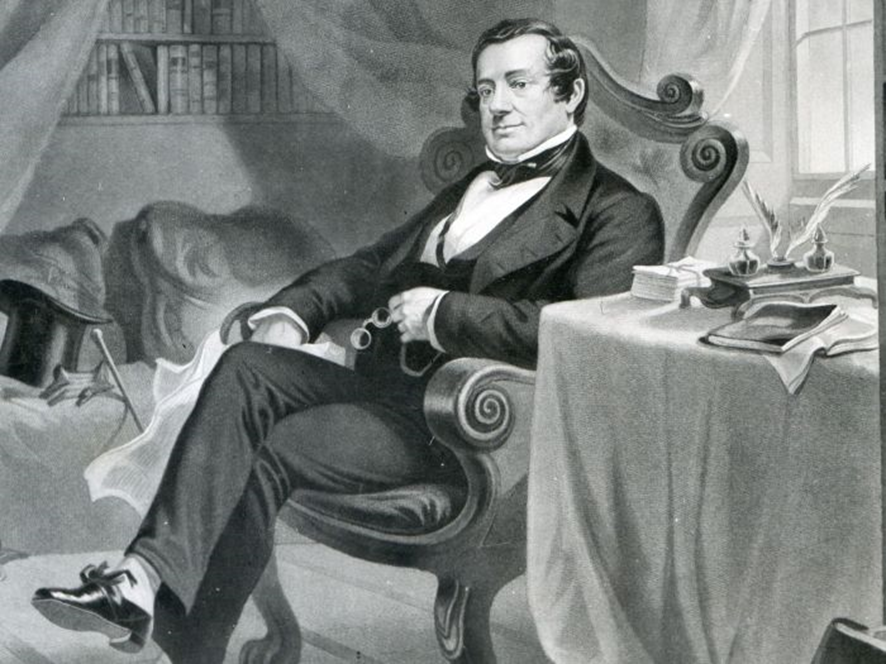
His father was William Irving Sr., originally from the village of Quholm on the island of Shapinsay in the Orkney archipelago, Scotland. His mother was Sarah (née Saunders), from the city of Falmouth in Cornwall, England. He was a non-commissioned officer in the British Royal Navy.
The Irving family settled in Manhattan, where they joined the merchant class. Washington was born on April 3, 1783, the very week New Yorkers learned of the British ceasefire that ended the American Revolution. His mother named him after George Washington. Irving met his namesake at the age of six, when George Washington was living in New York following his inauguration as president in 1789. The president blessed the young Irving. Irving commemorated that meeting with a painting that remains in his home.
Date of death: November 28, 1859.
The Legend of Sleepy Hollow, The Legend of the Headless Horseman
Washington Irving’s famous opening to this story, which first appeared in The Sketch Book in 1820, evokes the dreamlike, almost mystical quality of the Hudson River Valley. The story is set in 1790, in the environs of the Dutch settlement of Tarry Town (Tarrytown, New York), in a secluded glen called Sleepy Hollow, known for its ghost stories and the haunted atmosphere that pervades the imagination of its inhabitants and visitors. The most infamous specter of the place is The Headless Horseman, said to be the ghost of a former Hessian soldier whose head was carried away by a cannonball in “some nameless battle” of the American Revolutionary War, and who “rides forth to the scene of battle in nightly quest of his head.”
The legend recounts the tale of Ichabod Crane, a lanky, awkward, and extremely superstitious schoolmaster from Connecticut who falls in love with 18-year-old Katrina Van Tassel—the only child of Baltus Van Tassel, a wealthy farmer—and her fortune, which is also sought by the burly and rowdy Abraham “Brom Bones” Van Brunt. One placid night, the ambitious teacher attends a party at the Van Tassels’ home. He dances, enjoys the feast, and listens to the ghostly tales told by Brom and the other locals, though his sole purpose is to propose to Katrina after the guests depart.
Following an unsatisfactory proposal, Ichabod rides home through the eerie woods between the Van Tassel farm and the settlement of Sleepy Hollow. As he passes various supposedly haunted landmarks, his active imagination is overwhelmed by the spirit stories told at the Harvest Party. Suddenly, the Horseman appears to him. In a frantic race toward the bridge adjacent to the cemetery of the Old Dutch Church, where it was said the Horseman would “vanish in a flash of fire and brimstone,” Ichabod rode for his life, desperately urging his horse toward the valley floor. Yet, to the pedagogue’s horror, the macabre spirit reached the bridge, reared his horse, and hurled his severed head into Ichabod Crane’s terrified face.
The following morning, Ichabod had mysteriously disappeared from the village, allowing Katrina to marry Brom, who was rumored to know a great deal about the events whenever Ichabod’s tale was told. Indeed, the only elements found concerning the teacher’s disappearance were his horse, his hat, and a mysterious shattered pumpkin at the very spot.
Although the true nature of the Horseman is left open to interpretation, the story hints that the rider was actually Brom (an agile and experienced horseman) in disguise.
The Film
The first time I saw the film, I didn’t know who the director was, but I must admit that the Gothic atmosphere, the contrast of light, the music, and Johnny Depp’s magnificent performance kept me glued to my seat. What a marvel I was witnessing! And what surprised me most was the presence of the great Christopher Lee. By age, I shouldn’t harbor such admiration for that incredible actor, but I have always been a cinephile; I’ve seen films far older than my time, and I continue to do so. That magnificent essence of classic films, those masterful scripts, and that style of acting—so different from today’s—manage to break the fourth wall. To get to the point, here are some facts about Tim Burton’s Sleepy Hollow.
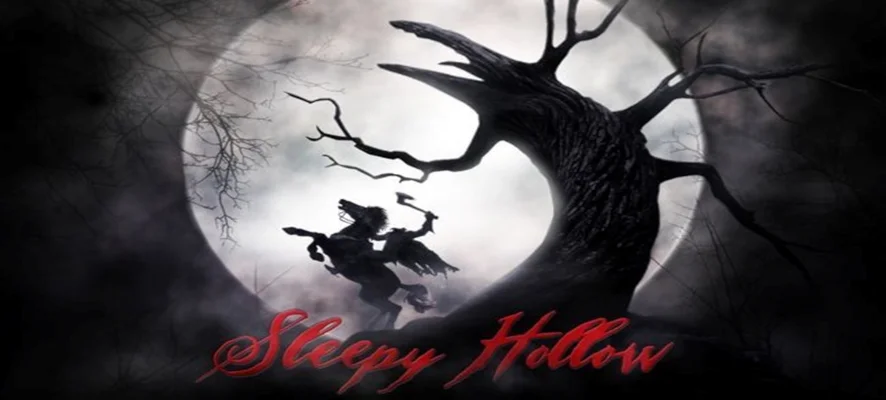
Sleepy Hollow was released in 1999, featuring a supernatural setting, unique sets, and another performance by Johnny Depp as Ichabod Crane—here a detective interested in forensic science, based on Washington Irving’s story. The supporting cast included Michael Gambon, Ian McDiarmid, Miranda Richardson, Christopher Walken, and Christina Ricci (chosen for the role of Katrina Van Tassel). Burton decided to change the original plot so that Ichabod would not be killed by the horseman but would instead end up with his beloved. Well-received by critics, with special mention of the score and impeccable cinematography by Emmanuel Lubezki, the film won an Academy Award for Best Art Direction, as well as two BAFTAs for Best Costume Design and Best Production Design.
Synopsis
The story takes us to North America in 1799, when a New York investigator named Ichabod Crane (Depp) is sent to Sleepy Hollow, a village lost in the woods that is apparently being terrorized by a fearsome and ruthless headless horseman. Crane must rely on all his sophisticated investigative methods to solve an enigma that is far more supernatural than he could have initially imagined.
Budget
With a budget of 100 million dollars, Sleepy Hollow managed to gross a total of 206 million at the global box office, becoming the eighth highest-grossing period horror title in history in the United States, ahead of Bram Stoker’s Dracula and The Others.
Curiosities
-
Stalled for Ten Years. The script for Sleepy Hollow was written by Kevin Yagher (a special effects specialist with experience in the horror genre, including A Nightmare on Elm Street 2: Freddy’s Revenge, Child’s Play, and The Phantom of the Opera). He decided to adapt Washington Irving’s “The Legend of Sleepy Hollow” into a screenplay, placing greater emphasis on the deaths, as they were meant to be the most spectacular part of the film. Paramount decided to back the project after seeing the success of Francis Ford Coppola’s Bram Stoker’s Dracula. Yagher’s script was retrieved but rewritten by screenwriter Andrew Kevin Walker (Seven, 8mm), although it retained some of the original elements.
-
The Filming Location was Not the Story’s Source.
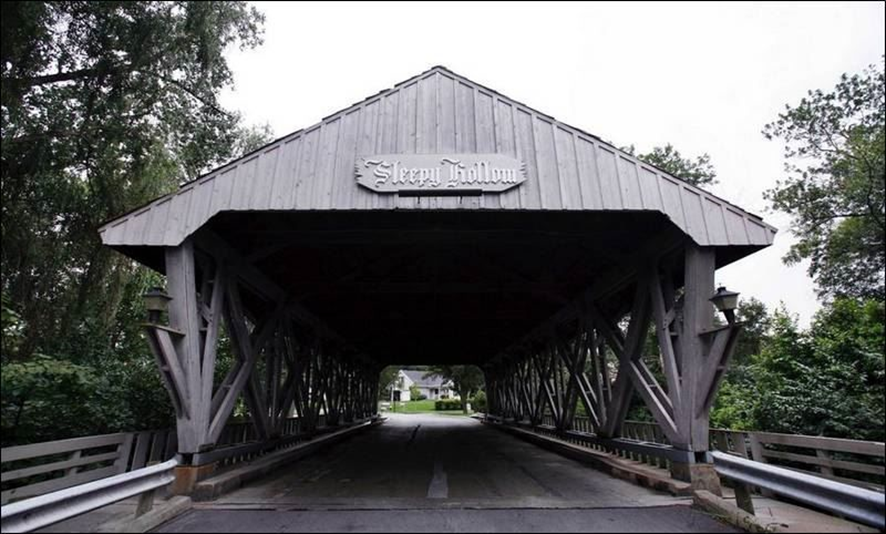 Tim Burton initially wanted to film the movie where Washington Irving set the legend: the Dutch communities of New York state—Sleepy Hollow and Tarrytown, located in the Hudson Valley. Incidentally, Washington Irving lived and died in Tarrytown in a small house by the river called Sunnyside. However, Burton was forced to move the production to England due to complications encountered in the United States.
The filming of Sleepy Hollow moved to England, specifically to Lime Tree Valley, where the village was built from scratch in three months at a cost of 1.5 million dollars. They built the bridge, the church, the courthouse, a farm, two mansions, and the rest of the houses. The design of Sleepy Hollow was handled by Rick Heinrichs, who also designed the Western Woods.
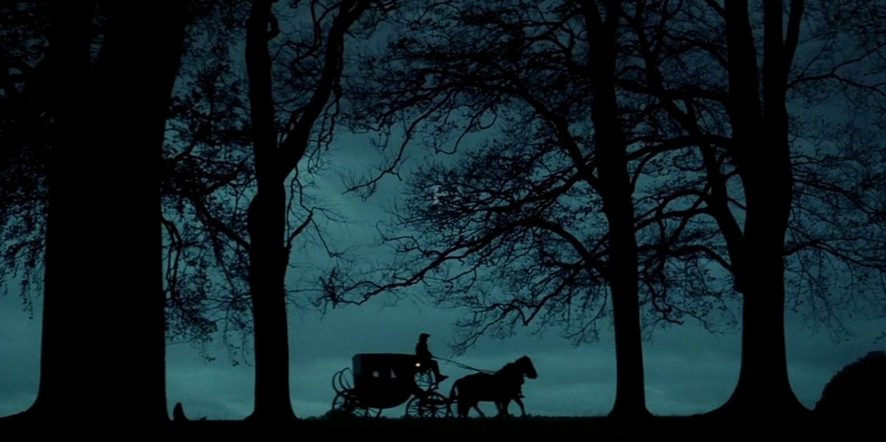
- The Western Woods. The dark Western Woods bordering Sleepy Hollow were built on a soundstage, ensuring control over lighting and weather. For its creation, they tried to imitate the massive trees of Windsor Great Park, manufacturing a large number of them 5 meters high using carbon fiber and metal. Real branches provided by Palm Brokers were also used under the supervision of the British forestry group.
-
The Tree of the Dead.
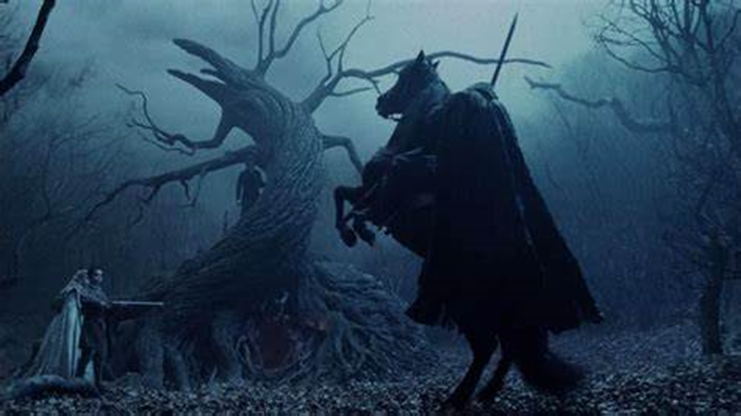
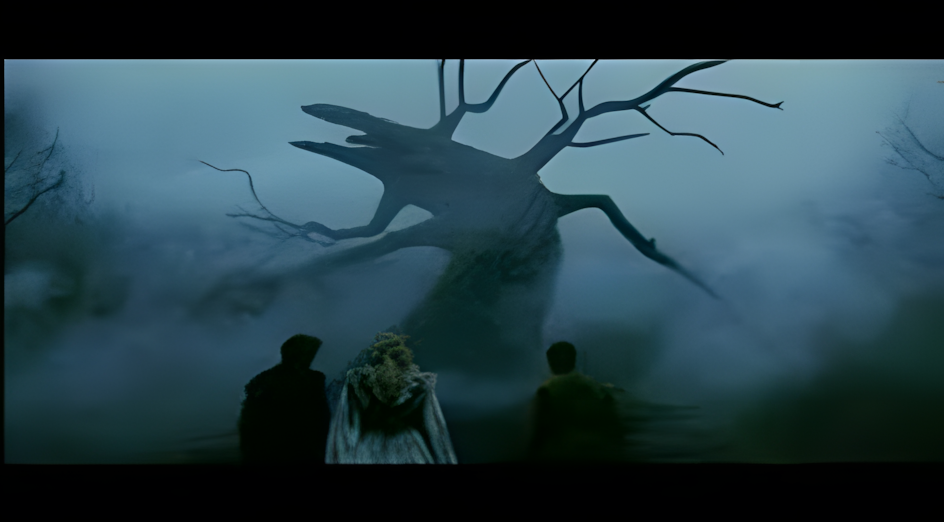 The Tree of the Dead is a key piece of the set, and its creation involved an added cost. For the interior, they used polyethylene, while the exterior used real branches, bark, and moss. Tim Burton was so pleased with the result that he decided to reuse it for Alice in Wonderland.
 -
The Old Mill.
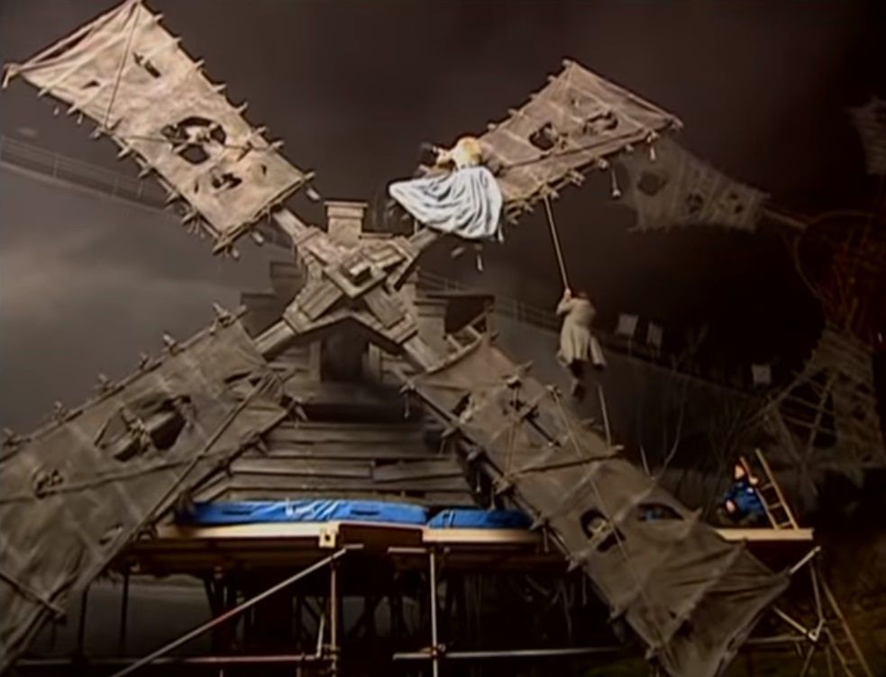 One of the most mysterious settings is the old mill, which Burton conceived as if it were Frankenstein’s mill. The filmmaker wanted to play with that idea. It was built outdoors due to its large dimensions, as it wouldn’t fit on any soundstage, making it a major task for the production team. Additionally, its blades were designed to resemble bat wings.
 -
Night Shoots. Many scenes were filmed at night, requiring the installation of three lighting towers on set with a power of 120 million watts. Amusingly, many neighbors called the police believing they had seen a UFO.
-
Torrential Rains.
 One problem the crew faced was torrential rain. It caused flooding through the center of Sleepy Hollow, turning everything into a quagmire. The team had to rebuild the paths and install a drainage plant.
 -
Jack Skellington Cameo.
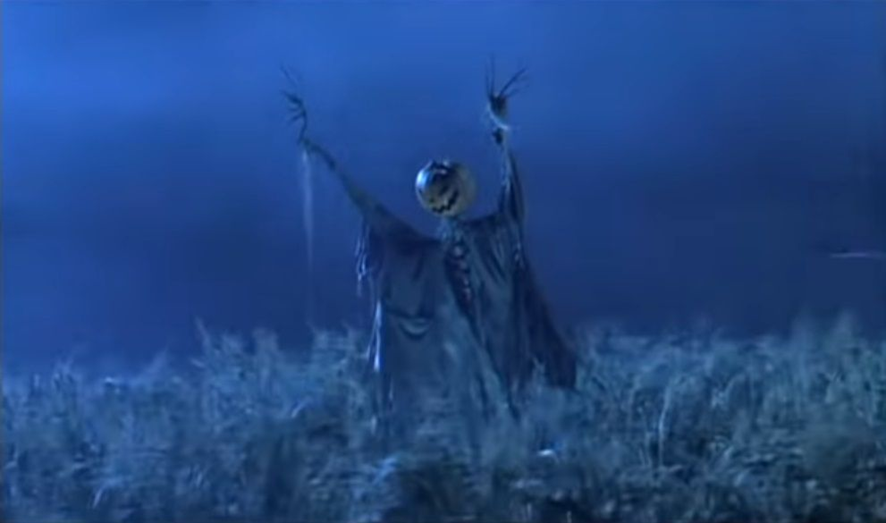
 In the scene where the carriage enters the cornfield, there is a scarecrow—it’s Jack Skellington!
 -
Orange Blood. To emphasize the Gothic and dark aesthetic, Tim Burton decided to film the entire movie with a blue filter. Consequently, the blood had to be bright orange so that, through the blue filter, it would appear its normal color.
-
Mechanical Horse.
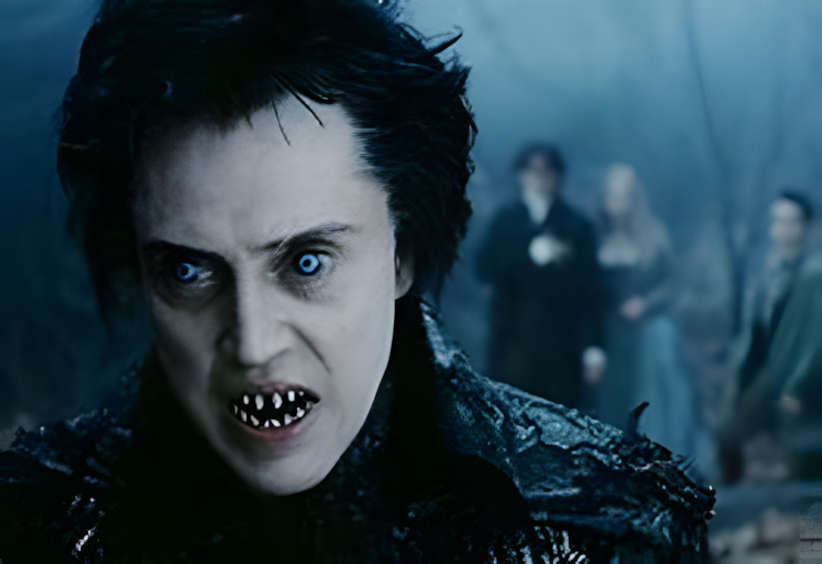
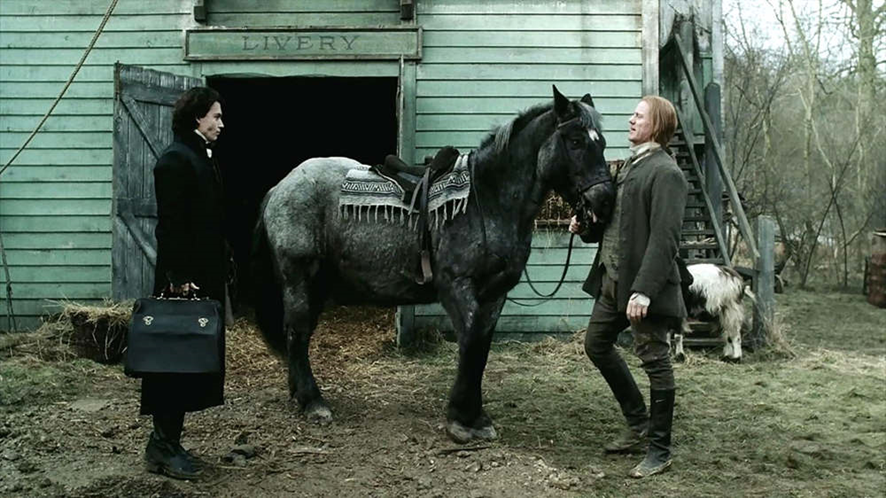 The character of the Hessian Horseman was played by Christopher Walken, but the actor kept a small secret until near the start of filming: he didn’t know how to ride a horse; in fact, he is afraid of them. To solve this, the production team retrieved a mechanical horse previously used for the film National Velvet, which had been used by Elizabeth Taylor. They rebuilt the horse’s exterior; it could run at three different speeds and emit “smoke” from its nostrils, as well as move its ears, eyes, and tail.
 -
The Horse Goldeneye was from Seville.
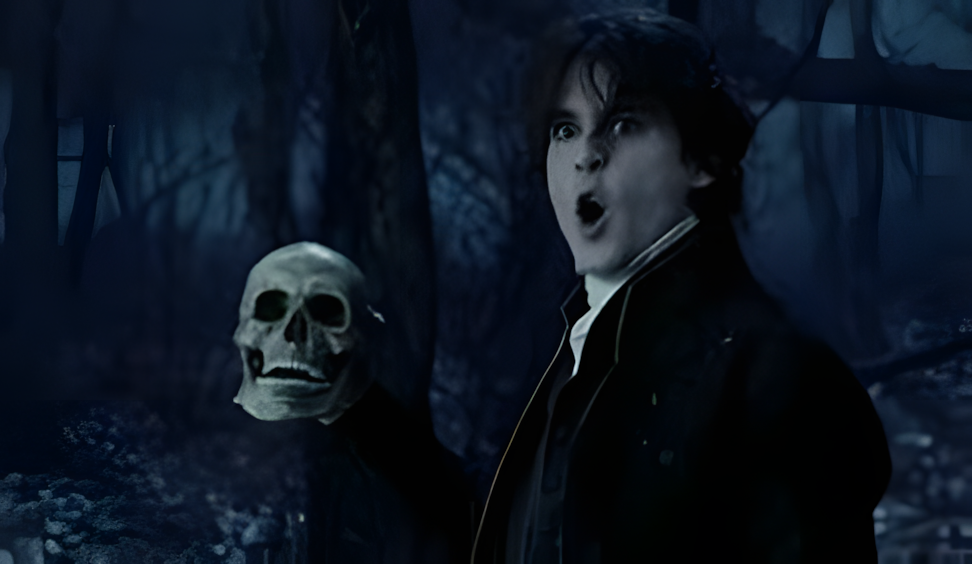 After filming ended, Johnny Depp decided to adopt the horse his character rode. It was a horse bought in Seville called Goldeneye, a name given because the poor horse was one-eyed.
 -
Johnny Depp as Ichabod Crane.
Tim Burton was certain that Johnny Depp would play Ichabod Crane. In the literary work, the character was quite ugly, with a huge nose and large ears, so Depp proposed being made up to match that fictional appearance. However, both Burton and the producers rejected the proposal. What the filmmaker did allow was for Depp to perform nearly all of his character’s action scenes. To avoid injury, Depp wore bulletproof clothing under Ichabod’s costume. -
Accidents During Filming. Actor Casper Van Dien broke his left index finger during the recording of the battle of the three axes. Nevertheless, he continued acting without saying anything to avoid having his participation reduced. Another who didn’t fare well was Ian McDiarmid; during the church scene when the doctor is killed by a blow to the head, Ian was accidentally struck with such force that he had to go to the hospital.
-
Creating the Headless Horseman. They placed a blue hood on the actor, which had three holes: two for the eyes and one for the mouth. After filming the scenes, they removed the actor’s head using CGI and subsequently recreated the collar of the tunic, which didn’t appear in the shot because it was hidden by Ray’s head.
-
Heads for the Decapitations. To create the horrific decapitations, the filmmakers used cutting-edge makeup and characterization effects for the time: they made plaster molds of the heads of the characters to be decapitated. Once the duplicate heads were made, details were added, such as placing hairs one by one with silicone, and adding eyes or even a copy of the teeth made with acrylics. They also paid close attention to the visible part of the spine and the texture of the inside of the throat.
-
Controversial Scene. One scene caused significant controversy: when the Headless Horseman goes to a family’s home to kill them, he doesn’t spare even the child, whom they decided to kill off-screen. The decision not to spare the child’s life was Tim Burton’s idea; as a child himself, he disliked the notion that children should receive different treatment in films.
-
Johnny Depp’s Inspiration. Johnny Depp developed Ichabod Crane’s personality by taking elements from actors such as Peter Cushing, Vincent Price, Christopher Lee, Basil Rathbone (using his personification of Sherlock Holmes as a primary reference), and even Angela Lansbury in Death on the Nile.
-
First Collaboration with Christopher Lee.
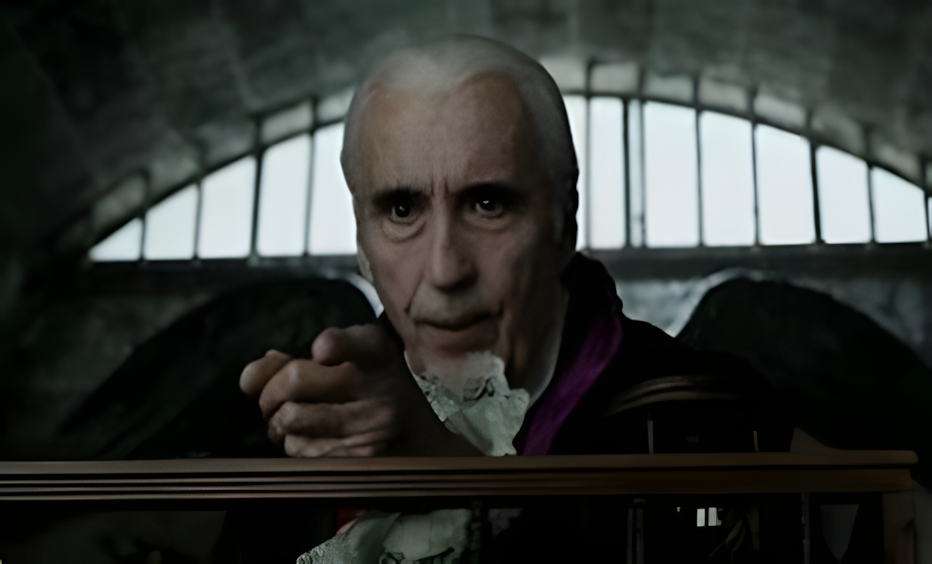 As if Johnny Depp using legendary horror actors as references weren’t enough, Tim Burton realized the dream of any genre lover: working with Christopher Lee.
The legendary actor, star of countless Hammer titles and the 1958 Dracula, was a true legend in the nineties with over 150 works behind him. With Sleepy Hollow, where he played the Burgomaster who sends Ichabod Crane to the eponymous village, a professional relationship began between Burton and Lee. Lee would later appear in Charlie and the Chocolate Factory and Dark Shadows, as well as voicing characters in Corpse Bride and Alice in Wonderland.
- The Leading Lady.
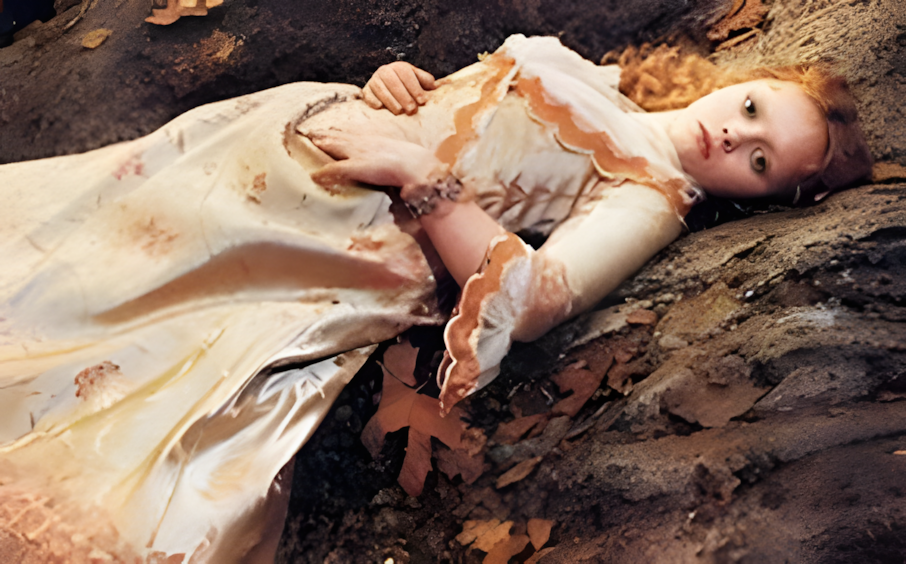 Winona Ryder was initially considered for the role of Katrina Van Tassel, which would have reunited her with Depp on screen nine years after Edward Scissorhands. However, the role ultimately went to Christina Ricci.
Christina Ricci had previously worked with one of Sleepy Hollow’s producers, Scott Rudin, on The Addams Family. She auditioned for the character and the role became hers.