“When a man bleeds inwardly, it is a dangerous thing for himself; but when he laughs inwardly, it bodes some ill to others.”
Childhood
The son of John Dickens (1786–1851), a clerk in the Navy Pay Office at Portsmouth Dockyard, and his wife Elizabeth Barrow (1789–1863), Charles was born into a family that would see both comfort and ruin. In 1814, the family moved to London, Somerset House, at number ten Norfolk Street. When the future writer was five years old, they relocated to Chatham, Kent.
His mother belonged to the middle class, while his father was perpetually burdened by debt due to an excessive inclination for extravagance. Charles received no formal education until the age of nine—a fact his critics would later brandish against him, viewing his formation as excessively self-taught. At that age, after attending a school in Rome Lane, he studied under William Giles, an Oxford graduate.
By 1823, he was living with his family at number 16 Bayham Street, Camden Town, which was then one of the poorest suburbs of London. Although his early years seemed idyllic to some, he described himself as a “very small and not over-particularly-taken-care-of boy.” He would also speak of his extreme pathos and his photographic memory of people and events, which later allowed him to translate reality into fiction with uncanny precision.
His life changed profoundly when his father was reported for failing to pay his debts and incarcerated in the Marshalsea debtors’ prison. Most of the family moved into the prison with Mr. Dickens—a possibility established by law at the time, allowing a debtor’s family to share his cell. Charles, however, was taken in by a Mrs. Roylance in Little College Street and would visit his father in prison on Sundays.
At the age of twelve, it was decided that the future novelist was old enough to begin work. Thus began his labor: ten-hour shifts at Warren’s Blacking Warehouse, a shoe polish factory located near the present-day Charing Cross railway station. During this period, his life was spent pasting labels on jars of shoe blacking for six shillings a week. With this pittance, he had to pay for his lodging and help support his family, most of whom remained with his father in prison.
After several months, his family was able to leave Marshalsea, though their financial situation did not improve until sometime later when, upon the death of Charles’s maternal grandmother, his father received an inheritance of 250 pounds. Crucially, his mother did not immediately withdraw Charles from the factory, which was owned by some of her relatives. Dickens would never forget his mother’s insistence that he remain there. These experiences left an indelible mark on his writing; he dedicated much of his work to denouncing the deplorable conditions under which the working classes survived. In his novel David Copperfield, widely considered his most autobiographical, he wrote: “I had no advice, no counsel, no encouragement, no consolation, no assistance, no support, of any kind, from anyone, that I can call to mind, as I hope to go to heaven!”
The First Stage of Adult Professional Life
In May 1827, Dickens began working as a junior clerk in the law office of Ellis & Blackmore, and later spent time as a court stenographer.
In 1828, he began contributing as a reporter to Doctors’ Commons and subsequently joined the True Sun as a parliamentary chronicler. Around this time, he became enamored with the London theatrical scene and decided to take acting lessons. However, on the day of his audition, he fell ill with the flu and could not attend—thus extinguishing his dreams of becoming a stage actor.
In 1834, the Morning Chronicle hired him as a political journalist to report on parliamentary debates and travel across the country covering election campaigns. In 1836, his literary sketches, which had been appearing in various publications since 1833, were collected into the first volume of Sketches by Boz. This was followed in March of that same year by the publication of the first installments of The Posthumous Papers of the Pickwick Club.
On April 2, 1836, he married Catherine Thompson Hogarth (1816–1879), the daughter of his newspaper’s owner, and established their residence in Bloomsbury.
They had ten children: Charles Culliford Boz Dickens (1837–1896), Mary Dickens (1838–1896), Kate Macready Dickens (1839–1929), Walter Landor Dickens (1841–1863), Francis Jeffrey Dickens (1844–1886), Alfred D’Orsay Tennyson Dickens (1845–1912), Sydney Smith Haldimand Dickens (1847–1872), Henry Fielding Dickens (1849–1933), Dora Annie Dickens (1850–1851), and Edward Bulwer Lytton Dickens (1852–1902).
His Masterworks
With Oliver Twist—the first English novel to star a child navigating the Industrial Revolution, a mirror of his own life—and David Copperfield, his great bestseller that sold 100,000 copies in a short time, he became the champion of social and children’s rights.
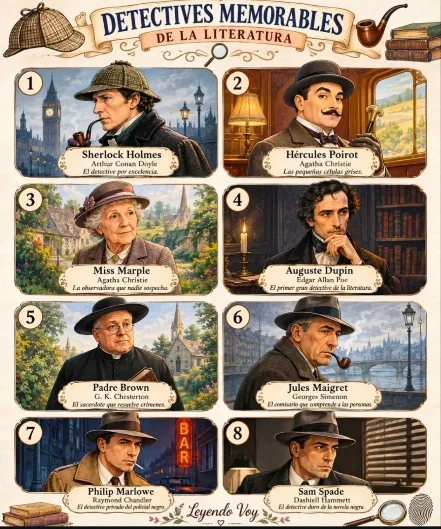
He was also the first writer to use the word “detective” in his novels.
Beginnings in the World of the Industrial Revolution
John Dickens’s imprisonment due to debt, and Charles being forced into the blacking factory at only twelve years old, were pivotal events. However, what truly scarred him was that even after his parents received an inheritance, they continued to make him work at the factory.
From a Graphological Perspective
A study of his handwriting reveals a tendency toward discouragement and despondency. Simultaneously, it shows the originality found in the capital letter of his first name. Upon inspecting his signature, his first and last names are joined, suggesting he was unable to separate his personal and professional lives. The capital “T” he formed demonstrates obstinacy and affectation.
From his use of the pen, a fairly accurate assessment can be made: he possessed a strong character with a tendency to impose himself upon others. In terms of his manuscripts, while there are amendments and deletions, they are not excessive, as his creative process involved changing his mind as he wrote.
Flirting with Mystery
Dickens was deeply influenced by thoughts of faith and the people in his circle. There are claims that he was a Freemason, though this has not been fully proven.
In his work Bleak House (1852–1853), published in twenty installments, he included a case of spontaneous human combustion. He had learned of an Italian countess who reportedly suffered this process. The collective work The Haunted House (1859) is a collection where various writers recount ghost stories.
He purportedly had premonitory dreams, and his classic A Christmas Carol famously features ghosts and specters.
The Dream of Dickens
Dickens’s writings were immense popular hits in his day. In 1856, his success allowed him to buy Gad’s Hill Place. This grand house in Higham, Kent, held special significance for him; as a child, he had walked past it and dreamed of living there. The location was also the setting for scenes in the first part of Shakespeare’s Henry IV, a literary connection that greatly pleased him.
Adoptive Son and Repudiation in the United States
In 1841, he was named an honorary citizen (Adoptive Son) of the city of Edinburgh.
In the United States, however, he was initially rejected by society due to his lectures and the novel American Notes, which was fiercely against slavery—something Dickens had witnessed and felt personally since his childhood. Despite this, he reconciled with the public following the publication of A Christmas Carol in 1843.
Jules Verne and Alexandre Dumas
During his travels to Italy, Switzerland, and France, he met these legendary authors.
Defender of Rights
He founded the Daily News, where he took on the role of actor and began giving lectures on copyright, the defense of prostitutes, and the condemnation of the death penalty, which was then a popular London entertainment. A champion of image and author rights, he supported organizations helping children and “fallen women.” He earned a lasting reputation as a philanthropist.
The Scandals of Dickens
Around 1850, Dickens’s health began to fail, a decline worsened by the deaths of his father, a daughter, and his sister Fanny. He decided to separate from his wife in 1858. In the Victorian era, divorce was unthinkable, especially for a figure of his fame. Nevertheless, he continued to support her and the house for the next twenty years until she passed away. Although initially happy together, Catherine did not seem to share his boundless energy. The strain of raising ten children and the pressure of living with a world-famous novelist certainly took its toll.
Georgina, Catherine’s sister, moved in to help, but rumors began to circulate that Charles was romantically involved with his sister-in-law. A further sign of his marital crisis appeared in 1855, when he sought out his first love, Maria Beadnell, who was also married at the time.
From then on, the change in his character was so marked that several friends claimed they no longer recognized the man they had known. Despite everything, Dickens continued writing and lecturing, finding refuge in the home of his friend Wilkie Collins—the father of the mystery novel. They wrote stories together and exchanged ideas for their respective works. In 1859, he published A Tale of Two Cities, and in 1863, he founded The Arts Club.
Literary Style
Dickens’s style is florid and poetic, often laced with a sharp comedic touch. His satires of British aristocratic snobbery—he famously called one of his characters “The Noble Refrigerator”—were immensely popular. His ironies, such as comparing orphans to shareholders or diners to furniture, are among his most acclaimed.
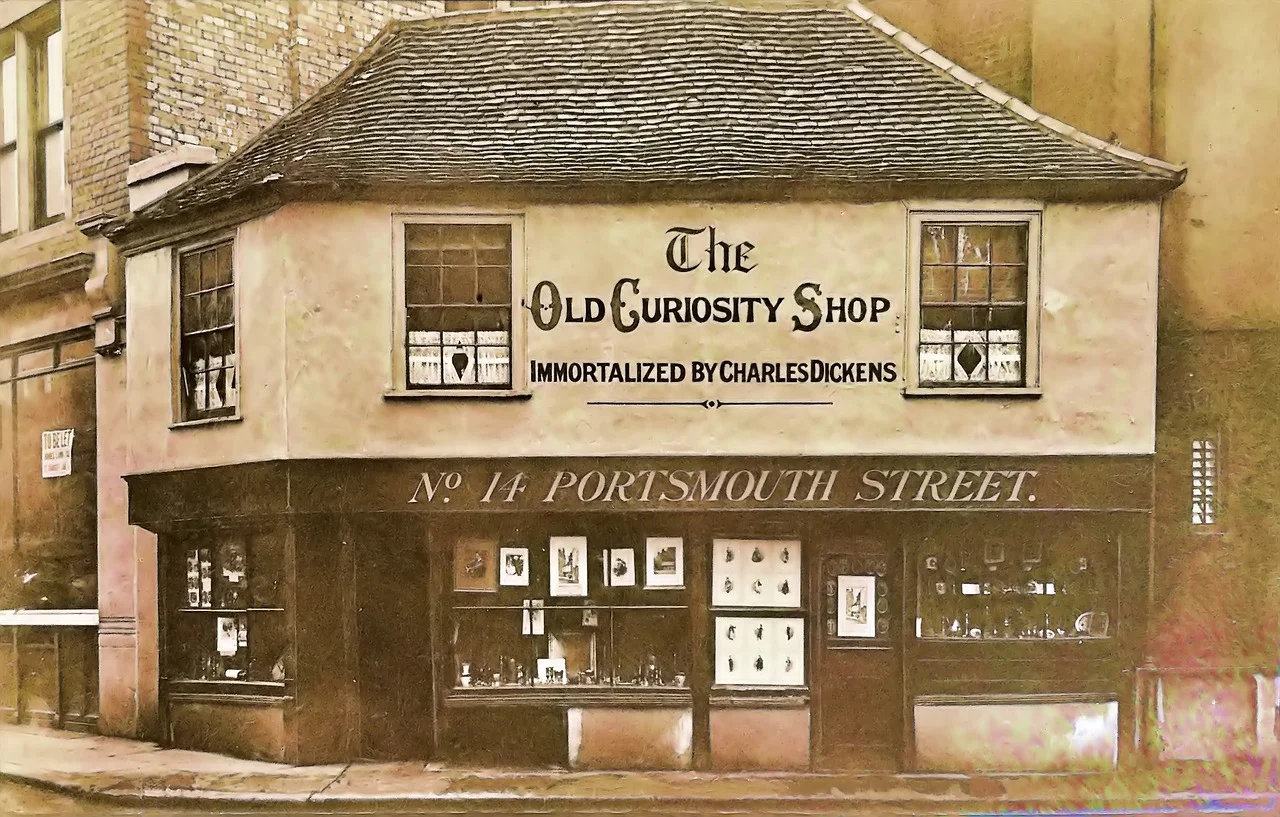
Another effect of his episodic style was the exposure to his readers’ opinions. Since he did not write his chapters far in advance of publication, he could gauge the public’s reaction and adjust the story accordingly. An example of this is The Old Curiosity Shop, the story of a pursuit where Nell and her grandfather flee the villain, Quilp. The novel’s progression mirrors the gradual success of that chase.
Characters
Most of Dickens’s masterpieces were written as monthly or weekly installments in journals like Master Humphrey’s Clock and Household Words, later reprinted as books. These serials made the stories cheaper and more accessible. American fans even waited at the ports of New York, shouting to arrivals on ships, “Is Little Nell dead?”
Part of Dickens’s brilliance lay in merging his serial style with a coherent novelistic ending. His monthly parts were illustrated by, among others, “Phiz” (the pseudonym of Hablot Browne).
Among his most famous works are Great Expectations, David Copperfield, Oliver Twist, A Tale of Two Cities, Bleak House, Nicholas Nickleby, The Pickwick Papers, and A Christmas Carol.
Social Style
Dickens’s novels were, above all, works of social criticism. He was a fierce critic of the poverty and social stratification of Victorian society. Through his works, he maintained a deep empathy for the common man and a skepticism toward the bourgeois family.
The Railway Crash
On June 9, 1865, while returning from France to see Ellen Ternan, Dickens suffered an accident—the famous Staplehurst rail crash. The first seven carriages of the train plunged from a bridge under repair. The only first-class carriage that did not fall was the one in which Dickens was traveling.
The novelist spent considerable time tending to the injured and dying before rescuers arrived. Before leaving, he remembered the unfinished manuscript of Our Mutual Friend and returned to the carriage solely to retrieve it. Typical of Dickens, he would later use this harrowing experience to write his ghost story “The Signal-Man,” in which the protagonist has a premonition of a rail crash.
Dickens managed to evade the investigation of the crash, as it is now known he was traveling that day with Ellen Ternan and her mother, which would have caused a massive scandal. Ellen, an actress, had been his companion since the end of his marriage. Having met her in 1857, she was likely the ultimate reason for his separation. She remained his companion—effectively his mistress—until his death. The full extent of the affair remained hidden until the 1939 publication of Dickens and His Daughter, a book about his relationship with his daughter Kate.
Kate had worked with Gladys Storey on the book before her death in 1929, claiming that Dickens and Ternan had a child who died in infancy, though no concrete evidence exists to support this.
He continued to write for the Old Year Magazine until his death.
Received by Queen Victoria
Shortly after, he was received by Queen Victoria, who was a devoted reader of his works. In 1869, he accepted the presidency of the Birmingham and Midland Institute, becoming its sixteenth president.
A Final Wish Ignored
Five years after the aforementioned accident, on June 9, 1870, he suffered a stroke and died the following day without regaining consciousness. Against his wish to be buried at Rochester Cathedral—cheaply, without ostentation, and strictly in private—he was interred in “Poets’ Corner” at Westminster Abbey, though efforts were made to respect his desire for privacy.
Upon his death, a printed epitaph circulated, stating that “he was a sympathizer with the poor, the suffering, and the oppressed; and by his death, one of England’s greatest writers is lost to the world.”
Dickens stipulated that no monument should be erected in his honor. His only life-size statue, created in 1981 by Francis Edwin Elwell, is located in Clark Park, Philadelphia, in the United States.
His greatest dream was to be free, and he achieved it by being a writer.
Works
Novels
- The Posthumous Papers of the Pickwick Club (1836–1837)
- Oliver Twist (1837–1839)
- Nicholas Nickleby (1838–1839)
- The Old Curiosity Shop (1840–1841)
- Barnaby Rudge (1841)
- Martin Chuzzlewit (1843–1844)
- Dombey and Son (1846–1848)
- David Copperfield (1849–1850)
- Bleak House (1852–1853)
- Hard Times (1854)
- Little Dorrit (1855–1857)
- A Tale of Two Cities (1859)
- Great Expectations (1860–1861)
- Our Mutual Friend (1864–1865)
- The Mystery of Edwin Drood (1870; unfinished)
Stories
- A Christmas Carol (1843)
- The Chimes (1844)
- The Cricket on the Hearth (1845)
- The Battle of Life (1846)
- The Haunted Man (1848)
- Intrepid Men (1853)
- A House to Let (1858)
- The Signal-Man (1866)