Censored Books.
-
Excalibur by L. Ron Hubbard: This is a forbidden book said to drive anyone who reads it insane. Its author, the founder of Scientology, declared in 1948 that the book was inspired during the eight minutes he was clinically dead during an operation. The content of Excalibur supposedly relates to a kind of absolute knowledge, the key to human existence and self-discovery. Hubbard circulated the manuscript among his closest friends as a test: all of them reportedly fell into a kind of frenzy, and some were even committed to psychiatric hospitals. This is presumably why Excalibur remains the only work by the creator of Scientology to never be published. Legend has it that everyone who has read the full text has lost their mind.
-
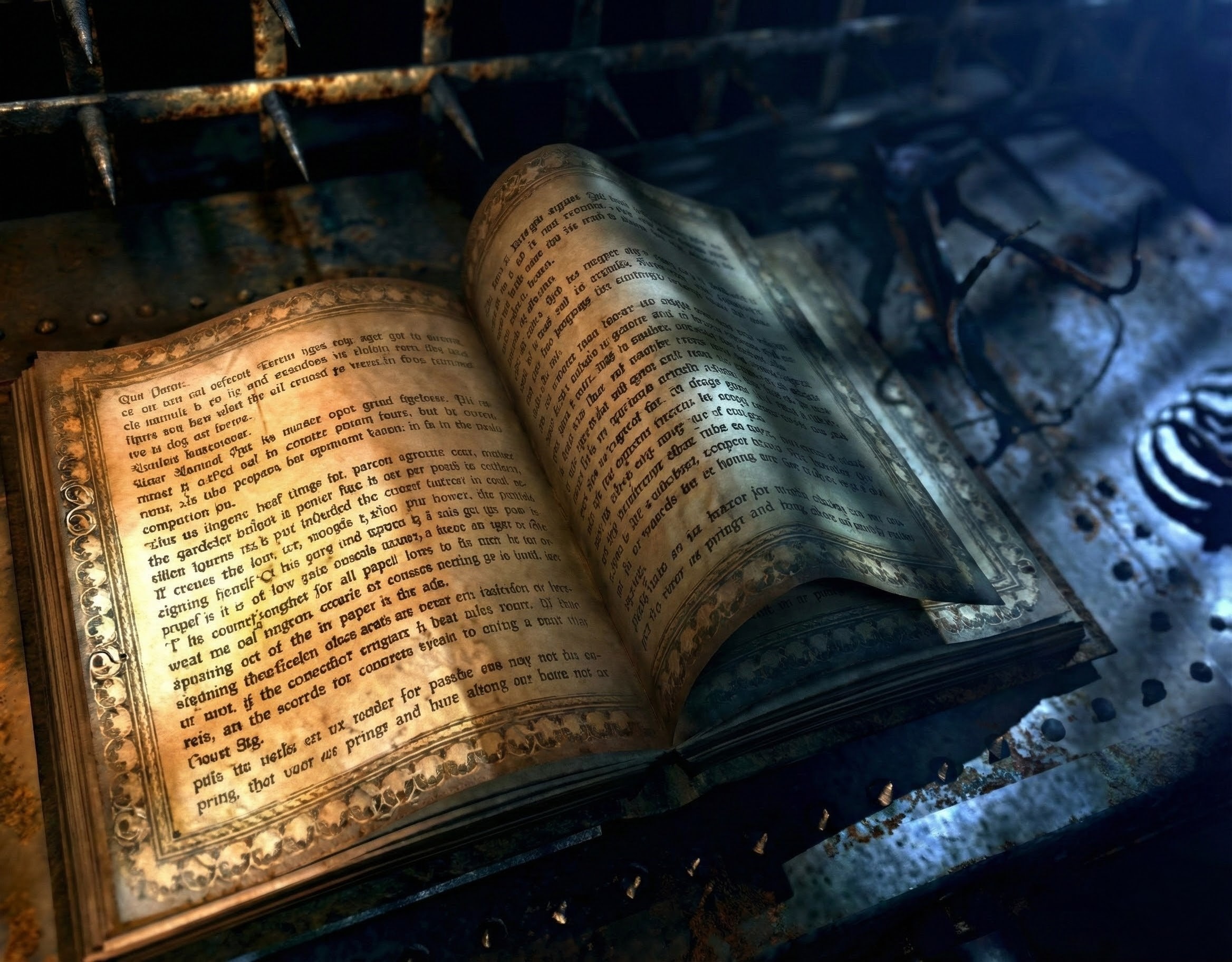
The “Codex Gigas”, also known as the “Gigas Codex” or the “Devil’s Bible”, is a vast medieval manuscript on parchment created at the beginning of the 13th century. It is believed to have been written in Latin by the monk Herman the Recluse of the Podlažice Monastery, in what is now the Czech Republic. This manuscript is famous for its staggering size (92 × 50.5 × 22 cm), holding the title of the largest known medieval manuscript, weighing some 75 kg. It contains the Bible (Vulgate version), the complete text of the Chronica Boemorum (Chronicle of the Bohemians) by Cosmas of Prague, medicinal cures, magical incantations, two works by the Jewish historian Flavius Josephus (Jewish Antiquities and The Jewish War), the Etymologies of Archbishop Saint Isidore of Seville, several medical treatises by the physician Constantine the African, a calendar, a list of the deceased, and other texts. A legend much later than its creation tells that the author was a Benedictine monk condemned to be walled up alive for breaking his monastic vows. To have his sentence commuted, the monk proposed creating a monumental work that would honor the monastery, a codex containing the Bible and all the knowledge of the world. The time stipulated by the monk himself was a single night, during which he struck a bargain with a demon. Today, the Codex Gigas is kept in Stockholm, Sweden.
Non-existent Books (Metaliterature).
-
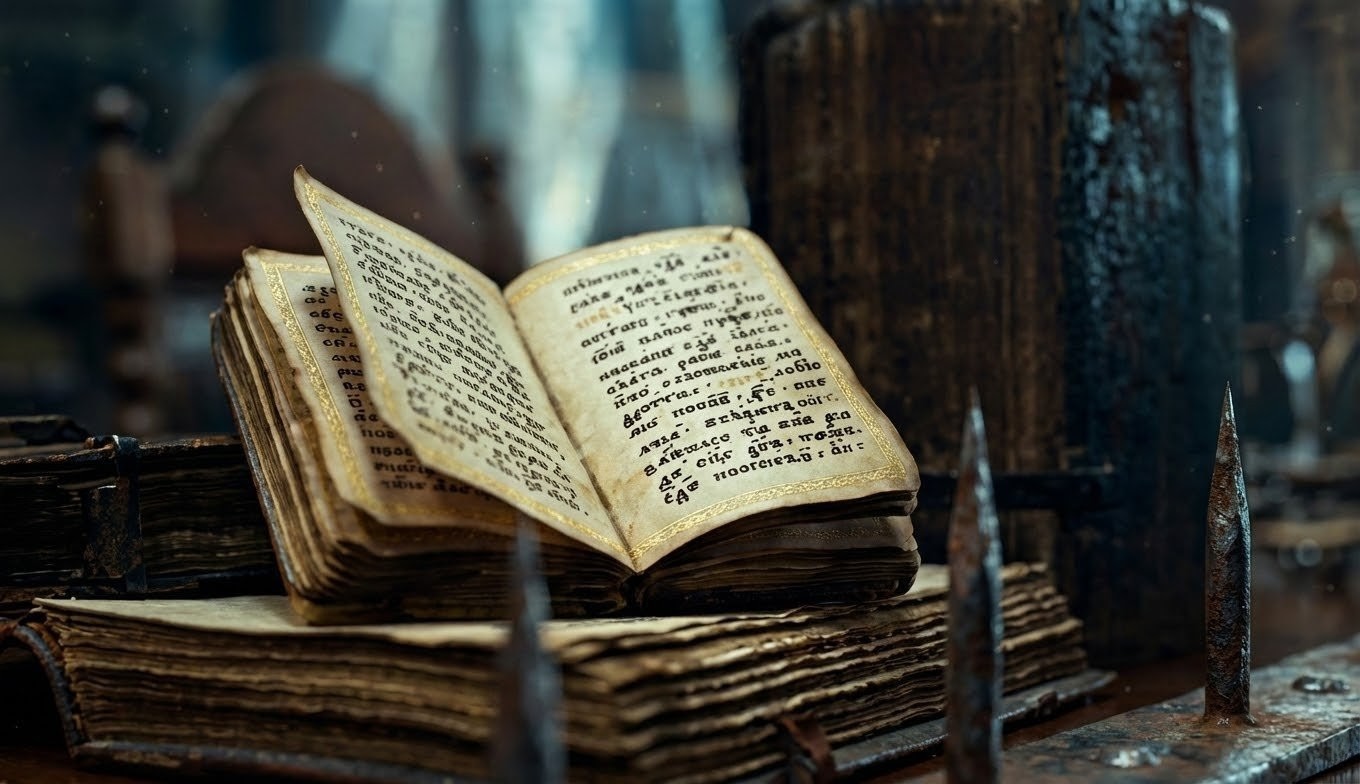
The Necronomicon is a fictional book created by the American writer H.P. Lovecraft. It appears in several of his stories and is mentioned by other authors of the Lovecraftian circle. The Necronomicon is described as a grimoire of arcane lore and ritual magic, the reading of which leads to madness and death. In the tales of Lovecraft and his successors, it appears as a record of forgotten formulas that allow contact with supernatural entities of immense power known as the Old Ones. The book is attributed to the “Mad Arab” Abdul Alhazred, a pseudonym Lovecraft used since his childhood. Though the Necronomicon is entirely fictional, it has inspired the publication of various real-world works under the same title.
-
“Most Potente Potions” and “A History of Magic” are books that appear within the Harry Potter series itself; they were created for the work and do not exist in reality. However, there are three that were written after being mentioned in the original saga: Fantastic Beasts and Where to Find Them, Quidditch Through the Ages, and The Tales of Beedle the Bard.
-
In the work Gargantua and Pantagruel by François Rabelais, the author invents various writers whose names are created through anagrams, just as he invents works he claims to have read and found in the Abbey of Saint Victor. These include: The Correct Method of Breaking Wind in Public, De modo cacandi, The Sweet Stench of the Spaniards, and Manual for Administering Suppositories.
-
In the story “His Last Bow” by Conan Doyle, Sherlock Holmes writes a book titled Practical Handbook of Bee Culture, with some Observations upon the Segregation of the Queen. He also penned others titled The Art of Deduction, an article on the differences between various tobaccos, Cryptic Writing, and The Utility of Dogs in Detective Work. His arch-nemesis, James Moriarty, does not lag behind and also writes a pair of books so complex that practically no one understands them except Moriarty: The Binomial Theorem and The Dynamics of an Asteroid.
-
In the novel The Name of the Rose by Umberto Eco, mention is made of a book titled The Second Book of Aristotle’s Poetics, which has never existed.
-
Borges, in one of his stories, invents a work titled The Book of Sand. However, in reality, there was a book called The Book of Sand which alluded to another Book of Sand that did not exist; whoever read it went mad because they could never reach the end of the reading. He also invented another titled The Sacred Book.
Prophetic and Cursed Books.
-
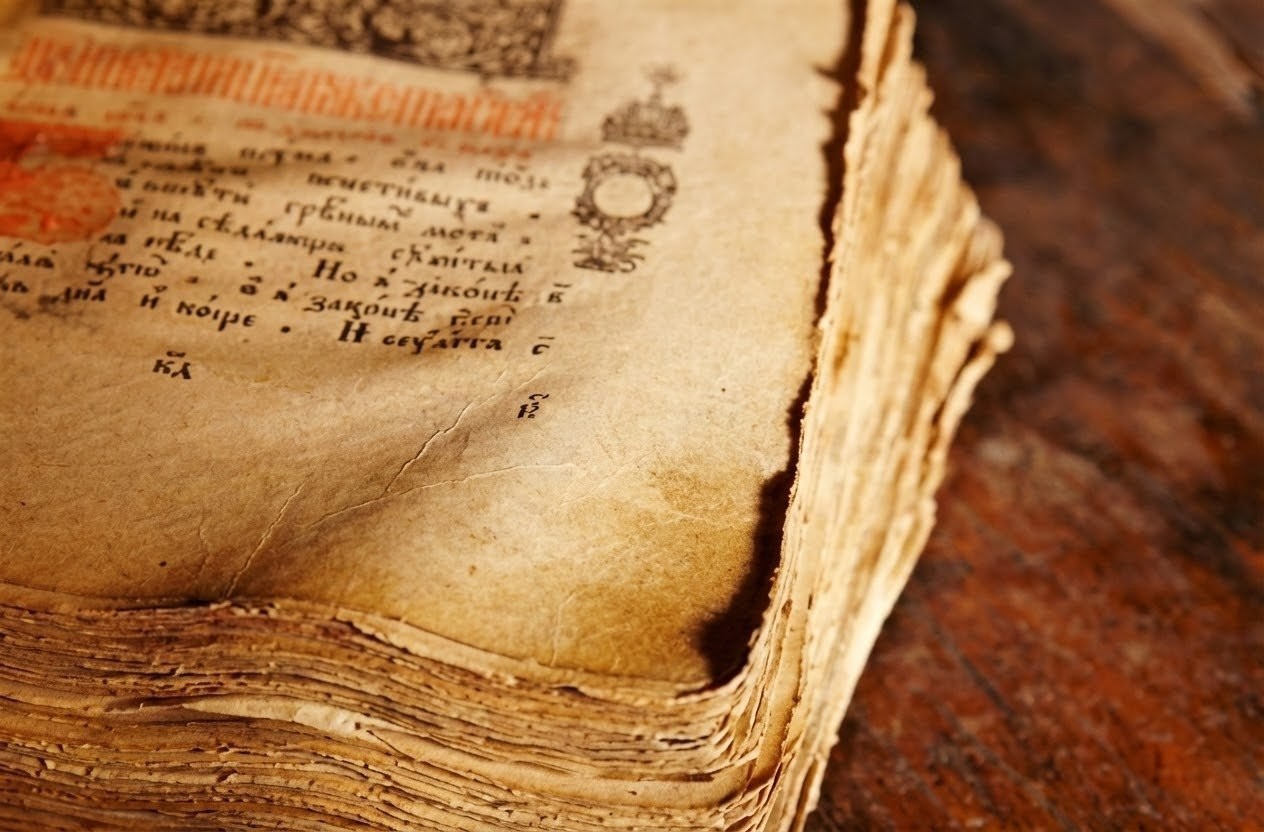
The “Sibylline Books” were mythological and prophetic works of ancient Rome. Legend has it that the Cumaean Sibyl, a very old woman, presented herself before the Roman King Lucius Tarquinius Superbus and offered him nine prophetic books at an extremely high price. When the king refused to pay, the Sibyl destroyed three of the books and offered the remaining six at the same price. After the king refused again, the Sibyl destroyed another three. Finally, the king agreed to buy the last three books at the price originally asked for the nine. These three books were kept in the Temple of Jupiter in Rome and were consulted only in the most dire situations. They were written in Greek, originally on palm leaves, which later transitioned to papyrus. Romans of the 2nd century B.C. through the Republic valued these books immensely, guarding them in a college of ten priests known as “decem viri sacris faciundis.” In times of crisis, Romans consulted these books to see if there was a prophecy applicable to the moment. However, the original Sibylline Books were destroyed by fire in 83 B.C., and a new collection had to be gathered. The Senate sent envoys to Troy, Samos, Erythrae, and other parts to collect any Sibylline verses that could be found. These books have also not survived to our day, as in the year 405, the Roman general Stilicho ordered their destruction.
-
“1984” by George Orwell, written in 1948. In this book, the protagonist eventually succumbs to torture and confesses that “two plus two equals five.” He discovers that they truly can “get inside you” and that “something dies inside your chest, burnt out, cauterized.” The terror in 1984 is the annihilation of the self and the destruction of the capacity to recognize the real world. Within this work, the character Emmanuel Goldstein writes a book titled The Theory and Practice of Oligarchical Collectivism, which appears across two of its chapters.
-
“The Catcher in the Rye” written by J.D. Salinger (1919-2010). This book was begun during the years of the Second World War; Salinger carried the first chapters of the manuscript with him during the combat he saw as a soldier in Europe. This helps us understand part of the disillusionment that runs through the book and that Salinger felt upon entering the adult world. But this is just one detail about one of the most mysterious men in literature, who, after conquering the world with a single novel, decided to withdraw from the publishing sphere for the second half of his life. a. Publication Controversy: When published in 1951, the novel’s direct and vulgar language generated great controversy. Moreover, the book contains sexual references, disdain for religious institutions, acts of smoking, drinking, and general rebellion. b. Censorship: It suffered censorship for several years in U.S. high schools, being considered too explicit for youths and a possible negative influence that might incite rebellion. c. Association with Crimes: Some killers, including Mark David Chapman (the murderer of John Lennon), claimed to have been inspired by the novel’s main character, Holden Caulfield, to commit their crimes. Though it is critical to note that Holden Caulfield is neither a criminal nor a killer in the novel. Within the book, a story written by the protagonist’s brother titled The Secret Goldfish is mentioned.
Non-existent Libraries in Existing Comics.
-
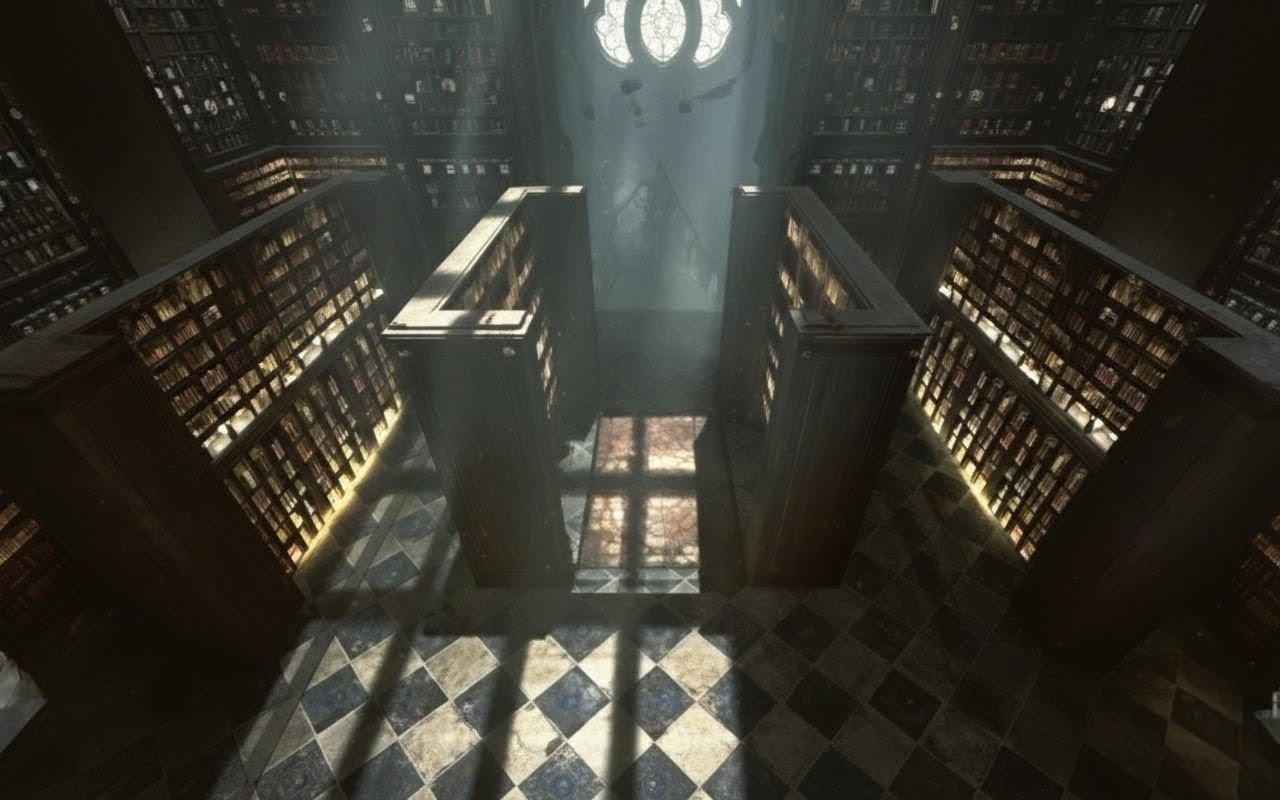
Doctor Strange’s Library in his Sanctum Sanctorum. This is where Doctor Strange keeps books of magic, rituals, and grimoires, such as the Darkhold and the Book of Vishanti. The Darkhold, also called the Book of the Damned, is an ancient grimoire that corrupts anyone who touches it. This book triggers chaos and causes an Incursion through various realities in the film. On the other hand, the Book of Vishanti is a treatise on white magic that also plays a relevant role in the plot.
-
The Library of The Sandman. These are the desired, dreamed, and imagined books that have never actually been written.