Clay Tablets
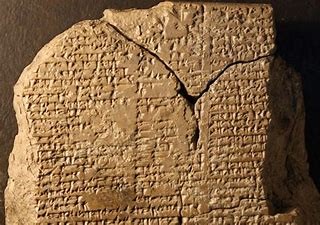
How were books born? To find out, we must go back to around the year 4000 BC. As you might imagine, we are starting with an object that is far removed from the concept of a book as we understand it today. In fact, no form of writing seems to have appeared before this moment. It was the Sumerians—the ancient people who lived in southern Mesopotamia—who invented the first documented writing system: cuneiform. Symbols were impressed with a pointed tool onto a clay tablet that was subsequently dried. The wedge-shaped incisions were brief and arranged in a pyramidal fashion.
Recommended Book: The Clay Bible (La Biblia de Barro), by Julia Navarro.
In Rome, a man confesses: “Father, I confess that I am going to kill a man…”
At the same time, Clara Tannenberg, a young archaeologist and granddaughter of a powerful man with a dark past, announces at a conference the discovery of some tablets that, if authentic, would be scientific proof of the existence of the patriarch Abraham. It is the work of a scribe who recorded the prophet’s account of the creation of the world, the confusion of tongues at Babel, and the Great Flood. A true “Clay Bible.”
Alongside a team of archaeologists, shortly before the start of the last Iraq War, Clara will launch risky excavations that encourage many people to put an end to her life and her grandfather’s: from millionaire art traffickers to four friends who will not rest until they achieve an implacable revenge.
Papyrus Scrolls
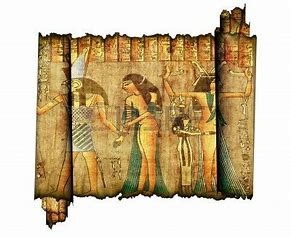
We must take a significant leap forward in time to admire the first papyrus scrolls. The earliest finds date back to 2400 BC and originate from Egypt. Papyrus is extracted from the pith of the eponymous plant that grows along the banks of the Nile. The pith, removed from the stem, was cut into strips, pressed, glued, and dried. The result? A sheet that could be written on with a sharpened calamus, obtained from a reed stem. Individual sheets were then glued into scrolls that could reach up to 16 meters in length. The text (written on the inner side of the scroll) was arranged in columns several centimeters wide.
The papyri were rolled up and stored in wooden tubes. Their consultation was, let’s say, not the most practical: the scrolls were wrapped around bulky wooden sticks, and both hands were needed to unroll them. Another drawback: papyrus is a fragile material subject to wear and moisture. Away from its warm and temperate native climate in the Mediterranean basin, it could easily rot.
Parchment
Around the 2nd century BC, a new material for writing emerged: parchment, a membrane obtained from animal skin that was treated with lime, cleaned, and stretched. This produced a thin, highly polished, resistant, and elastic surface. The most refined parchments are still considered one of the best supports for writing—it is no coincidence that they continued to be used until the 14th century AD.
What are the origins of parchment? We must look toward Greece. The name derives from the city of Pergamum, home to one of the largest libraries in the world, a rival to the Library of Alexandria. It was when papyrus began to be in short supply that parchment became the perfect alternative.
Recommended Book: Never Say It Was a Dream (No digas que fue un sueño), by Terenci Moix.
Cleopatra mourns the end of her love on a boat traveling up the Nile. She has been abandoned by her lover, the Roman Marc Antony. In the hearts of both are all the conflicts of love and passion, which will lead to new encounters that will inevitably have a fatal destiny. “Never Say It Was a Dream” is a great love novel set in an exciting historical period: the death throes of Egypt threatened by the imperialism of all-powerful Rome. But it is, above all, an attempt to reclaim the figure of one of the most fascinating women in history. Cleopatra appears in this novel as an original and contradictory character.
She is no longer just a woman in love, but a woman completely dedicated to politics—a sphere in which she knew how to cultivate cultural cross-breeding and use it to her advantage.
A splendid altarpiece on all the phases of love, on death and the fall of empires—themes that Terenci Moix captures with mastery in this novel.
Wax Tablets
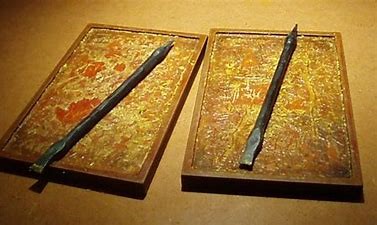
In ancient Rome and Greece, wax tablets began to circulate, being much more practical than previous writing materials. These were small wooden blocks coated with layers upon layers of wax and incised with the tip of a stylus (made of wood, metal, bone, or ivory). The tablets could be scraped and reused. The innovation lay in the form: the tablets (reminiscent of today’s digital tablets) were joined at one end by string or iron wires. We are facing the ancestor of ring binders and bound books.
Codices
We have reached the greatest revolution in the history of the book. The Romans called them “codices,” a name derived from the Latin caudex (bark, tree trunk). These codices looked like books as we understand them today: they were protected by a wooden cover (or sheets of glued papyrus or parchment), and their interior included sheets of papyrus written on both sides.
The great revolution lies in the convenience of the format: codices were smaller in size, pages were easy to turn, and page numbers and indices facilitated consultation.
Despite this, Pagans and the Jewish people remained closely attached to the tradition of the scroll and were very suspicious of the novelty. On the other hand, the Christian community enthusiastically welcomed the discovery, with monks transcribing prayers and sacred texts into codices. In the Middle Ages, Christianity was decisive in establishing these “new books,” which became a vital means of transmitting literary works.
Later, with the invention of the printing press, part of the work of the copying monks would be undermined. However, the common people benefited from this progress, as it became easier for them to acquire books, and their spread allowed the population to gain in culture.
Illuminated Manuscripts
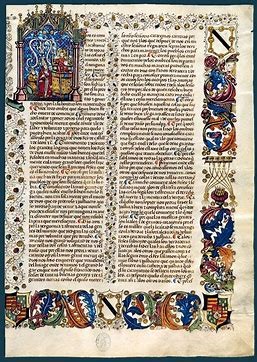
Recall that as early as 105 AD, Cai Lun invented paper in China. However, it would still take some time to see the first bound book with paper pages. In the period from 400-600 AD, the first illuminated manuscripts on parchment sheets appeared. These valuable books were handwritten by monks, decorated with precious materials such as silver or gold, colored with bright dyes, and adorned with detailed illustrations.
In the Library of Madīnat al-Zahrā or Medina Azahara in Córdoba (Andalusia), they possessed the best literature and treasures as valuable as these types of manuscripts. This included literature on medicine, theology, philosophy, songs, botany, etc. It was one of the largest libraries in the world, after that of Constantinople.
Recommended Book: The Name of the Rose, by Umberto Eco.
It is the Middle Ages, near the winter of 1327, under the papacy of John XXII. The Franciscan William of Baskerville and his disciple, the Benedictine novice Adso of Melk, arrive at a Benedictine abbey in northern Italy, famous for its impressive library which has strict access rules. William must organize a meeting between the Pope’s delegates and the leaders of the Franciscan order to discuss the supposed heresy of the doctrine of apostolic poverty, promoted by a branch of the order: the Spirituals. The success of this meeting is threatened by a series of deaths that the superstitious monks, at the urging of the blind former librarian Jorge of Burgos, believe follow the pattern of a passage from the Apocalypse.
William and Adso, frequently evading the abbey’s rules, try to solve the mystery, discovering that the deaths actually revolve around the existence of a poisoned book, a book thought lost: the second book of Aristotle’s “Poetics.” The arrival of the papal envoy and inquisitor Bernard Gui initiates an inquisitorial process of bitter memory for William, who in his search has discovered the magnificent and labyrinthine library of the abbey. William’s scientific method is pitted against the religious fanaticism represented by Jorge of Burgos.
The First Printed Book
A large part of the book’s history coincides with the history of printing, which began in the 6th century AD when the first woodblock printing process was invented in China. The wooden block, with characters carved in relief, was dipped in ink and pressed onto a sheet like a stamp. One of the first texts printed with this system—or at least one of the oldest to reach us—is a copy of the Diamond Sutra dating from 868 AD: it is a scroll composed of six sheets of paper more than five meters long.
Movable Type and the Gutenberg Bible
We have reached another decisive stage in the history of the book and the most important in the history of printing: the invention of movable type. We stay in China, where in 1041 the typographer Bi Sheng invented movable type made of clay. In 1298, Wang Zhen perfected the invention, replacing clay with wood and inventing a system of revolving tables that improved the printing technique. It did not achieve the desired success due to the vast number of characters in the Chinese language.
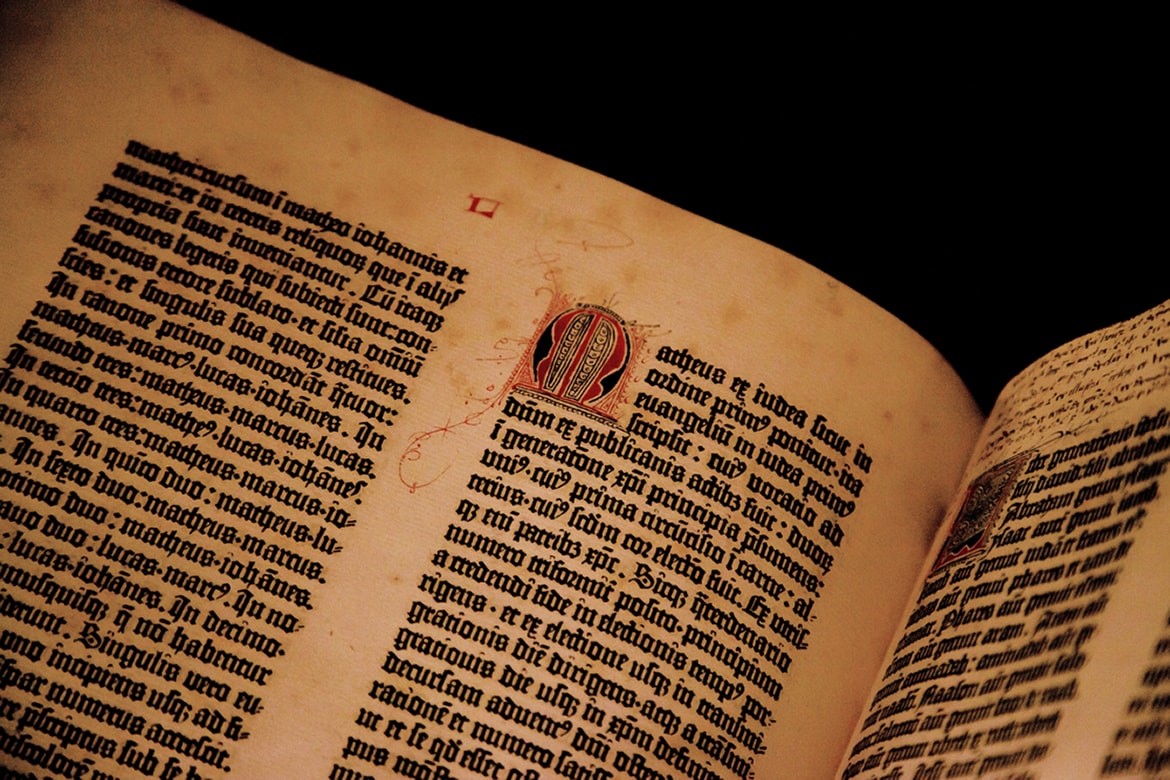
The person who later perfected and brought this system to Europe was the German goldsmith Johannes Gutenberg. The first book printed with the new machine was the “Gutenberg Bible,” which saw the light of day on February 23, 1455, with a run of 180 copies. Of these, only about twenty have survived to this day.
By the end of the 15th century, the printing press had spread to more than 200 European countries, with a production of more than 20 million books. This represented a great cultural boom, which until then had been little enjoyed by the common people.
Pocket Classics
In 1501, the first pocket-sized books of the classics in Greek and Latin were born.
Aldus Manutius, an Italian publisher, grammarian, and humanist, is remembered for two discoveries that could not be missing from our history: he invented the pocket format—small and affordable books—and introduced italics, whose compact letters helped save space. Thanks to these discoveries, many more “gentlemen” could own books and, if necessary, put them in their pockets to read whenever and wherever they preferred.
Curiosity: There also existed written books kept inside walnuts or in minuscule formats for when people had to make long journeys on horseback and did not want to miss the pleasure of reading. Napoleon Bonaparte always carried tiny books with him.
Digital Books
In the early 1970s, Project Gutenberg gave birth to the first electronic books. For several years, digital books were produced with a single objective: to archive works, especially books in the public domain. It was in the 21st century that the digital format began to be considered for publishing as well. In 2000, the first book in electronic format was published: the novel Riding the Bullet by Stephen King. More than 400,000 copies were sold in a single day. A few years later, in 2007, Amazon launched the Kindle, the first e-book reader, which also swept away readers.
Today we are in the midst of the e-book era. However, this does not mean that ink and paper books are going extinct. Printed books coexist with their “digital grandchildren” and continue to fascinate with the irreplaceable smell of printed paper.
Books by Lola de la Cámara
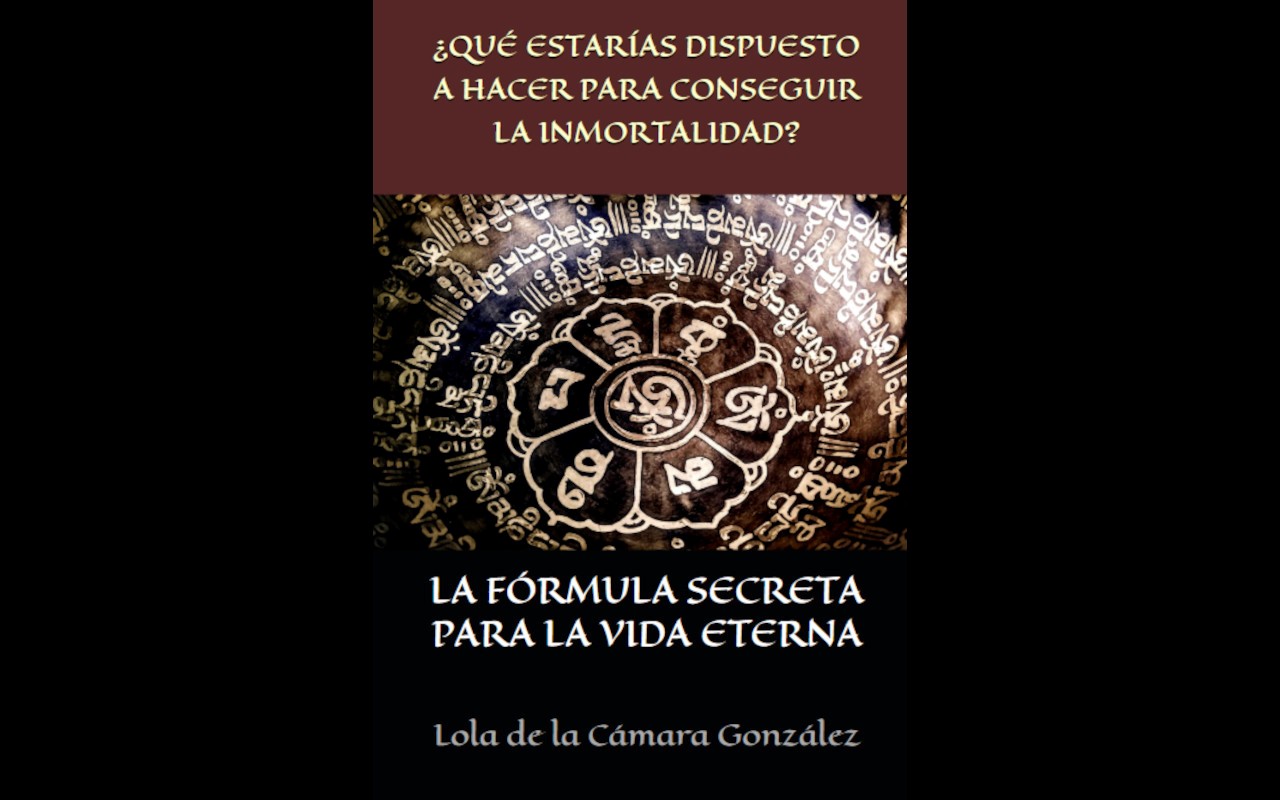
The Secret Formula for Eternal Life
Genre: Fantastic-Everyday Reality.
Before dying in a suspicious car accident, Pedro (a 16th-century alchemist) and his wife Clara ask their friend Steffan to take care of their only daughter, Sussan, born in the 20th century. She is the key and the bearer of the “Formula for Immortality,” though she is unaware of this secret that has been so well kept for centuries by her parents and Steffan (a vampire).
A powerful secret organization will pursue them across Spain, eventually ending in Florence. Not only is Sussan’s life at stake, but also immortality for a chosen few of Society.
Tip-Tap: They Lurk in the Dark
Genre: Detective Fiction.
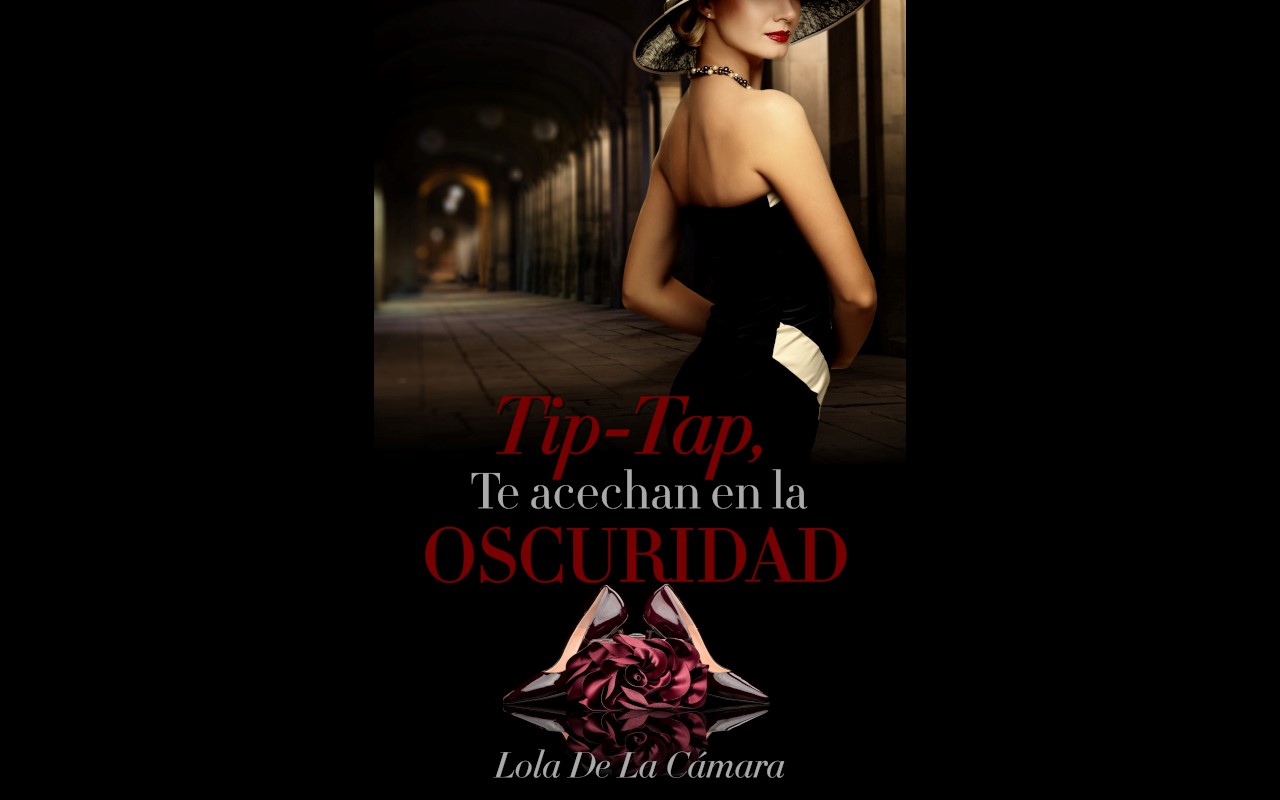
That crime never rests is something that Rafael, a brilliant inspector from the Córdoba police force, will experience even during his vacation at a northern spa. Thus, after successfully concluding the investigation of a corpse found at the site chosen for his rest, he receives a call from his chief in the Capital of the Caliphs to return early due to a shortage of personnel.
This time, he will face a serial killer with psychotic traits and unpredictable behavior. A tough test for Rafael and his partner, Sub-inspector Cristina, who will have to give their all in a race against the clock to prevent death from continuing to increase its sinister lists—all set in a beautiful city that will live through dark and stormy days, and not just because of the weather.