A contraction of All Hallows’ Eve, also known as the Night of the Witches, Halloween is a feast of pagan origin celebrated on October 31st. Its roots stem from an ancient Celtic festival from over 3,000 years ago known as Samhain (“End of Summer” in Old Irish).
The feast was celebrated in Ireland when the harvest season came to an end and the “Celtic New Year” began, coinciding with the autumnal equinox. It was believed that during that night, the spirits of the dead could walk among the living.
The ancient Celts believed that with the arrival of Samhain, the line connecting the world of the living with that of the dead narrowed, allowing both good and evil spirits to pass through. Masks were worn to ward off evil spirits, and banquets were held at the graves of family ancestors.
The sacred rites celebrated had, in their origins, a purifying and religious character. To establish communication with the dead, people helped them find their way by placing lit candles in windows.
When the Roman occupation reached Celtic lands, the festivity blended with the invaders’ own traditions, such as the “Harvest Festival” celebrated in honor of the goddess Pomona.
Popes Gregory III and Gregory IV attempted to supplant Halloween with the Catholic feast of All Saints’ Day, which was moved from May 13th to November 1st.
Expansion
The festivity of Halloween reached the United States and Canada in 1840 through Irish immigrants, but it did not begin to be celebrated on a massive scale until 1921, when the first Halloween parade was held in Minnesota.
In Spain, there are numerous different traditions depending on the region.
In Galicia, the classic description of the Santa Compaña (Holy Company) that most closely aligns with tradition is the one provided by folklorist Xesús Rodríguez López:
“The Company is the gathering of souls from Purgatory for a specific purpose. At twelve midnight, the deceased rise, processing out through the main door. A living person walks in front with a cross and a cauldron of holy water on their arm, and they must not, under any pretext, turn their head. Each deceased soul carries a light that is not seen, but the smell of burning wax is clearly perceived. The procession itself is not seen, but the slight breeze produced by its passing is felt. The unfortunate leader can only be excused from such a grim task by finding another person and handing them the cross and the cauldron before they make a circle on the ground, thereby becoming free from leading the Company.”
This procession of souls forms two rows, wrapped in shrouds and barefoot. Each ghost carries a lit candle, and their passing leaves the scent of wax in the air. At the head of this ghostly company is a larger specter called the Estadea.
Led by a living person (a mortal) bearing a cross and a cauldron of holy water, followed by souls with lit candles—not always visible—their presence is felt through the smell of wax and the wind that rises as they pass.
This living person preceding the procession can be a man or a woman, depending on whether the parish patron is a male or female saint. It is also believed that whoever performs this “duty” does not remember during the day what occurred during the night. Such cursed individuals can only be recognized by their extreme thinness and pallor. Each night, their light grows more intense, and each day, their pallor increases. They are allowed no rest on any night, so their health weakens until they fall ill, with no one knowing the cause of such a mysterious ailment. Thus, they are condemned to wander night after night until they die or another unsuspecting person is caught (to whom the leader must pass the cross they bear).
They walk uttering prayers (almost always a rosary), funeral chants, and ringing a small bell. Upon their passing, all animal noise in the forest previously ceases; only bells are heard. Dogs announce the arrival of the Santa Compaña by howling disproportionately, and cats flee terrified.
As early as the 18th century in Asturias, children begged for food at house doors during that night, carrying lamps in their hands.
In numerous municipalities in Castile, houses were decorated with pumpkins with holes carved into them to simulate a face. A candle or light was then placed inside to invoke good spirits and frighten people in an atmosphere of terror.
In many towns in Madrid, people dressed in black and rang small bells until dawn. Furthermore, lights were taken to cemeteries to guide the dead, and the graves of the deceased were cleaned.
Trick or Treat
According to a popular Celtic legend, on Halloween night, not only the spirits of the dead but all kinds of entities from the spiritual realms could wander the Earth.
Among them was one especially evil being named Jack O’lantern, who went from house to house asking for “trick or treat.” According to tradition, the best thing was to make a deal, no matter the cost, so as not to fall for his trick, which consisted of cursing the house and its inhabitants, who would suffer all kinds of misfortunes from that moment on.
Although the translation of “trick” as truco and “treat” literally as trato has become generalized in Spanish, it is not a “trick” in the strict sense but rather a “scare” or a “prank.” Therefore, a more exact translation would be “scare or sweet” or “mischief or sweet.”
Today, children go through the streets on Halloween night in costume, asking for sweets and using the famous phrase: “Trick or treat!” If the inhabitants of the house give them candies, cookies, or money, it means they have accepted the deal; if they refuse, the children play some kind of prank, such as throwing eggs or shaving cream at the door.
THE FINGER
The recording of this tale is attributed to Isaac Luria of Safed, a 16th-century rabbi. According to the popular account, a woman was cruelly murdered on her wedding day and, for some strange reason, was buried wearing her wedding dress. After some time, a man heading to his own wedding passes the site where the woman was buried. The man sees a branch on the ground and, as a joke, decides to crown it with a ring while rehearsing his own vows. At that moment, the earth shook, casting up the corpse of the buried woman; she tells him that from that moment on, they were joined in holy matrimony.
CORPSE BRIDE
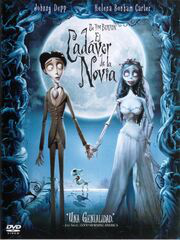
The story is set in a cold and somber Victorian-era village, a parody of aristocratic Europe. A young man named Victor, son of fishmongers Nell and William Van Dort, is about to marry the equally young and beautiful Victoria, daughter of the ruined aristocrats Maudeline and Finis Everglot. Though they hardly know each other, they fall in love the instant they meet. Victor ruins the wedding rehearsal and is rebuked by Pastor Galswells, who forbids him to return until he has learned his wedding vows.
The young groom wanders through the forest, reviewing his vows without success. Finally, after much practice, he recites his vows correctly and places his wedding ring on a root on the ground. Suddenly, the root—which is actually a human hand—grips his arm firmly, and from the ground emerges the corpse of Emily, wrapped in a wedding dress. Emily declares that Victor is her husband, and he faints after receiving the traditional kiss.
Victor wakes up in a village filled with the dead. Terrified, he asks for an explanation of where he is. The corpses explain that he is in the Land of the Dead and that Emily, whom he has accidentally married, is a young woman who was seduced, murdered, and robbed during an attempt to flee with her lover. He flees the village, trying to escape, but Emily catches him and gives him a wedding gift: the living skeleton of his former pet, a dog named “Scraps.” Wishing to return to his true fiancée, Victoria, the young man convinces Emily to return to the Land of the Living under the pretext of introducing her to his parents. With the help of Elder Gutknecht and through a Ukrainian spell (which is only reversed by pronouncing the word “hopscotch”), they manage to return to the forest. He leaves Emily in the wood and runs in search of his beloved. While he is telling her what happened, Emily appears, separating them and taking Victor back to the Land of the Dead.
Victor apologizes to Emily for lying to her.
Emily feels betrayed; it is at this moment that she begins to realize that perhaps her union with Victor is not right. Meanwhile, Victoria tries to convince her parents and the pastor of the danger Victor is in, married to a corpse bride. But instead of believing her, the Everglots lock her in her room and decide to marry her to Lord Barkis Bittern, a wealthy guest of the family, instead of her beloved Victor.
In the Land of the Dead, an employee of the Van Dorts arrives and informs Victor of Victoria’s marriage to Lord Barkis. Victor decides to apologize to Emily, who discovers that her marriage to Victor is not valid, since the vows only work until “death do us part.” This means that both would have to recite the vows again in the Land of the Living. It is then that Victor commits to drinking a potent poison, which will kill him. Emily does not believe Victor wants to do it, but Victor, knowing that his beloved has continued her life without him, decides to go through with it.
As Victoria marries, the inhabitants of the underworld prepare for the ceremony, ascending to the Land of the Living and causing panic in the city. It is then that the newly married Lord Barkis discovers that his bride is bankrupt, which is an inconvenience for him since he only wanted her money and jewels, intending to kill her afterward. Victoria heads with the rest of the city’s inhabitants to the church where the wedding is being held. In the middle of the ceremony, Emily sees Victoria and realizes that to obtain her own happiness, she must sacrifice Victoria’s. She decides to end the ceremony and hand Victor over to her. The act is interrupted by the appearance of Lord Barkis, who reminds them that Victoria is still his wife, seizing her and holding her at swordpoint. It is then that Emily discovers that Lord Barkis is the same man who robbed and killed her long ago.
Barkis and Victor fight; Victor uses a kitchen fork for lack of a more appropriate weapon. Just as Barkis is about to run him through with the sword, Emily intervenes, receiving the blow—though she suffers no harm as she is a corpse bride.
Sword in hand, Emily demands that Barkis leave the church. However, before leaving, he takes the cup of poison (which was intended for Victor), believing it to be wine, and recites a toast. Upon drinking it, he dies, and thus the dead invited to the wedding take their revenge for what he did to Emily.
Feeling liberated, Emily leaves the church and dissolves into thousands of blue butterflies that disappear into the night, flying toward Heaven.