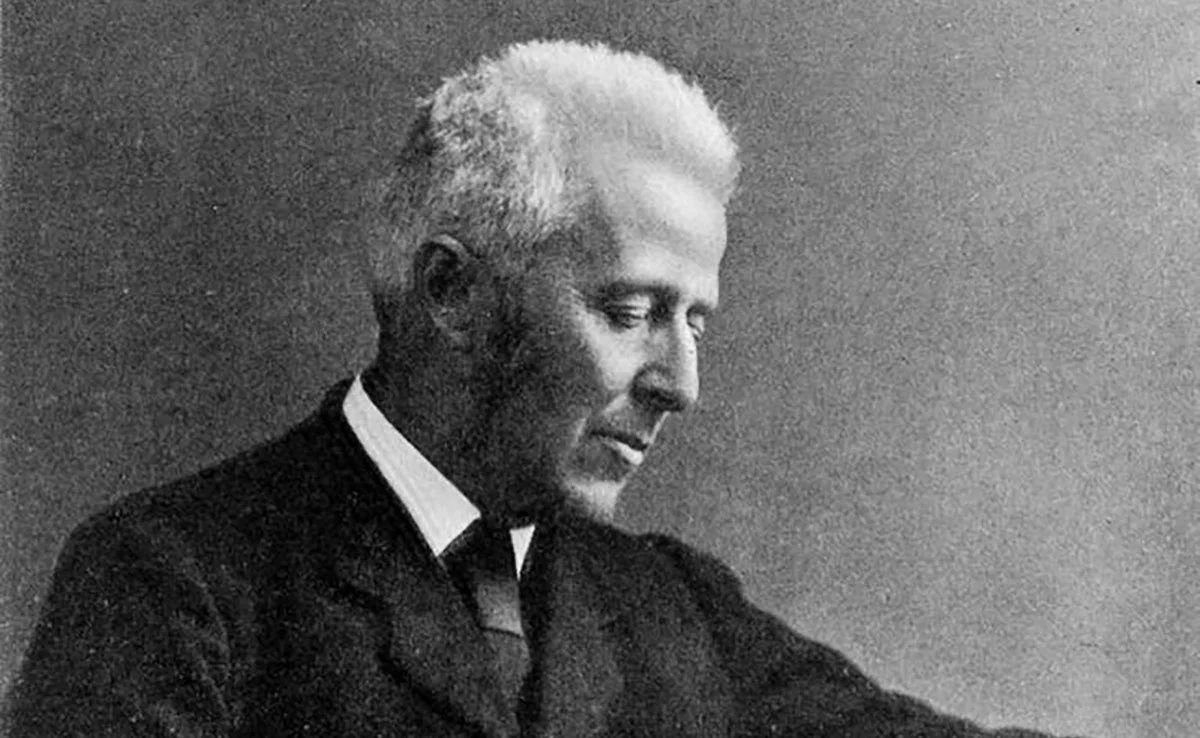
Joseph Bell was tall, thin, and of athletic build. He took great care in his dress: a white shirt, a dark tie, a deerstalker hat, and a jacket covered by a checkered wool Inverness cape. While the deerstalker hat was an addition by an illustrator—modeled after one his brother wore for hunting—and the pipe in the books was long and straight, theater and film adaptations gave it a curved shape to better reveal the actors’ facial features.
But the startling similarity between Bell and the fictional sleuth in Arthur Conan Doyle’s novels is not limited to appearance, nor is it mere coincidence. Like his great-grandfather, grandfather, and father before him, Bell graduated in medicine from the University of Edinburgh.
At that time, the Scottish capital was an unsafe city, home to a corrupt network of murderers who sold the bodies of their victims to universities as dissection material for future doctors.
Mortality was high due to the unsanitary state of the streets. The sewage system was so overwhelmed that it often contributed to the spread of cholera, typhus, and diphtheria epidemics.
Bell began working to assist the sick, often selflessly. On one occasion, he contracted diphtheria himself.
He recovered, but not without lingering effects: his voice took on a higher pitch, and muscle rigidity in his legs permanently altered his gait. Even so, nothing would prevent him from standing out as one of the great British physicians of the 19th century.
Observe, Deduce, Confirm
Bell modernized surgery. He was one of the first to use phenol gas—with its antiseptic qualities—to sterilize operating room instruments. However, he is best known for his extraordinary capacity for observation and deduction.
His method consisted of observing closely, deducing, and confirming the evidence. Applying this to his patients, he was able to discern qualities and ailments without asking a single question, leaving both his patients and his students—among whom was the future writer Conan Doyle—utterly perplexed.
He would often encourage his students to recognize patients as a left-handed cobbler or a retired sergeant who had served in Barbados through precise observation and logical deduction. He frequently astounded both the patient and his pupils by making such claims, sometimes before the patient had even spoken.
Deduced Crimes
In a city with such a high murder rate, the “Bell method” proved especially useful for solving crimes. His deductive techniques, combined with his medical knowledge and study of handwriting analysis (he would later take an interest in ballistics and fingerprinting techniques), often led Bell to collaborate with the police.
One of the most gruesome cases he attempted to resolve was the series of murders that terrified London’s Whitechapel district in 1888. Between August and November of that year, the bodies of five women appeared, murdered with a distinct modus operandi involving strangulation, throat-slitting, and abdominal mutilation.
After weeks of investigation alongside his colleague, fellow surgeon Henry Littlejohn, Bell concluded that the killer was the lawyer Montague Druitt, though he could not provide definitive proof. To this day, the true identity of the author of those deaths remains a mystery.
Inspiration for Conan Doyle
Arthur Ignatius Conan Doyle first met Bell in 1877 while studying medicine.
“Voltaire taught us the Zadig method, and every good teacher of medicine or surgery exemplifies that method and its results daily,” Dr. Joseph Bell—known as Joe to his friends—would say.
Before his students’ eyes, the doctor would stand in silence for a few seconds, observing the middle-aged man before him. Without the man opening his mouth, the doctor said: “Congratulations: I see you have served in the army and have recently discharged.” To which the patient replied with a brief, “That is so, sir.” Bell then concluded: “Furthermore, you were a non-commissioned officer stationed in Barbados.” He was correct.
Bell explained that he deduced the man had been in the army because he hadn’t removed his hat upon entering; that he was still tanned from service; that his air of authority suggested he was not a private; and that his swollen feet indicated elephantiasis, a disease typical of the Caribbean and rare in Great Britain, which an officer might contract after being in Barbados.
That demonstration—as theatrical as it was brilliant—of the power of observation and deduction would change the life of the 17-year-old medical student who had accompanied the officer into the room. From then on, Arthur Conan Doyle never missed a single class of Bell’s, who became his favorite professor.
He attended every practical session the doctor gave every Friday in the surgical amphitheater of the Edinburgh hospital. He wanted to learn to think like the professional who could diagnose with a mere glance.
Arthur Conan Doyle, Bell’s Assistant
Two years later, after teaching operative surgery at the university, Bell was appointed chief surgeon at the Edinburgh hospital and moved away from the classroom. However, surgeons could choose students to assist them. The doctor chose the future creator of Sherlock Holmes, whom he considered one of his most promising pupils.
Arthur embraced the opportunity with enthusiasm, becoming the assistant to the surgeon and teacher he most admired. He followed a man who valued observation and patience, who looked at reality with different eyes and interpreted it. Bell delved beyond the superficial, and what he found told him what he needed to know.
Every day, Arthur sat with other colleagues in a room adjacent to Dr. Bell’s consulting office. There he received patients, took note of their statements, and determined their referral to Bell or other specialists. The celebrity doctor’s genius was well known, earning him fame among the sick, who claimed they could be seen by a man who knew what ailed them without subjecting them to days of painful medical tests. For most, it was magic. For Conan Doyle, it was a way to learn how Bell’s mind worked. Over time, Arthur began to note down what he predicted his tutor would say, later confirming his findings and his skill in his notebook.
One day, Arthur ushered a woman with a certainly rare dermatitis into the office.
“You come from Burntisland, don’t you? How was the crossing? I see you passed through Inverleith Row…” Bell remarked, to the woman’s astonishment. She nodded and raised her hands to show him her condition; she described the irritation and the pain she felt. “You must leave the linoleum factory,” the surgeon sentenced.
He then explained to the students that the woman had an accent from the Fife region; that she had red clay on her shoes, and the only red clay within 30 kilometers of the hospital was on Inverleith Row; and that the condition of her hands showed signs similar to other patients from Burntisland—the nearest town to Fife—where there was a linoleum factory that could cause such dermatitis. Doyle looked at his notebook and was surprised to see his own clues following the same path as Bell’s. He was learning to think like him.
When Conan Doyle found himself with little more than ink and paper, he decided to write some stories. One day, after cutting his teeth on a few short adventures, he thought the time had come to write a novel. He imagined a character who possessed the intelligence of Joseph Bell but who, instead of curing patients, solved crimes.
He later wrote in a red notebook he used to jot down ideas: “Novel title: A Tangled Skein.” He looked at the title of the work he was about to write and thought he didn’t like it. He turned it over in his mind, wondering what Joseph Bell would call it… He crossed out what he had written and stamped “A Study in Scarlet.”
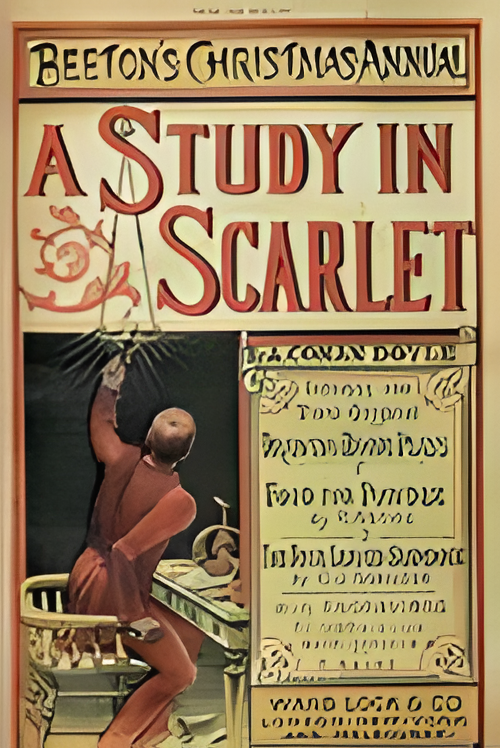
Five years later, Bell expressed his admiration for his pupil’s literary creativity in the prologue of one of the volume’s editions. However, over time, the immense success of the character began to discomfort him. In a 1901 interview, he complained about the constant comparisons with Sherlock and expressed his desire to go down in history for his professional career, rather than for being the detective’s alter ego.
“My mind is like a racing engine, tearing itself to pieces because it is not connected up with the work for which it was built.” — Sherlock Holmes.