Have you ever wondered about the origins of some of our most cherished Christmas traditions? If so, today I bring you some history behind these festive customs.
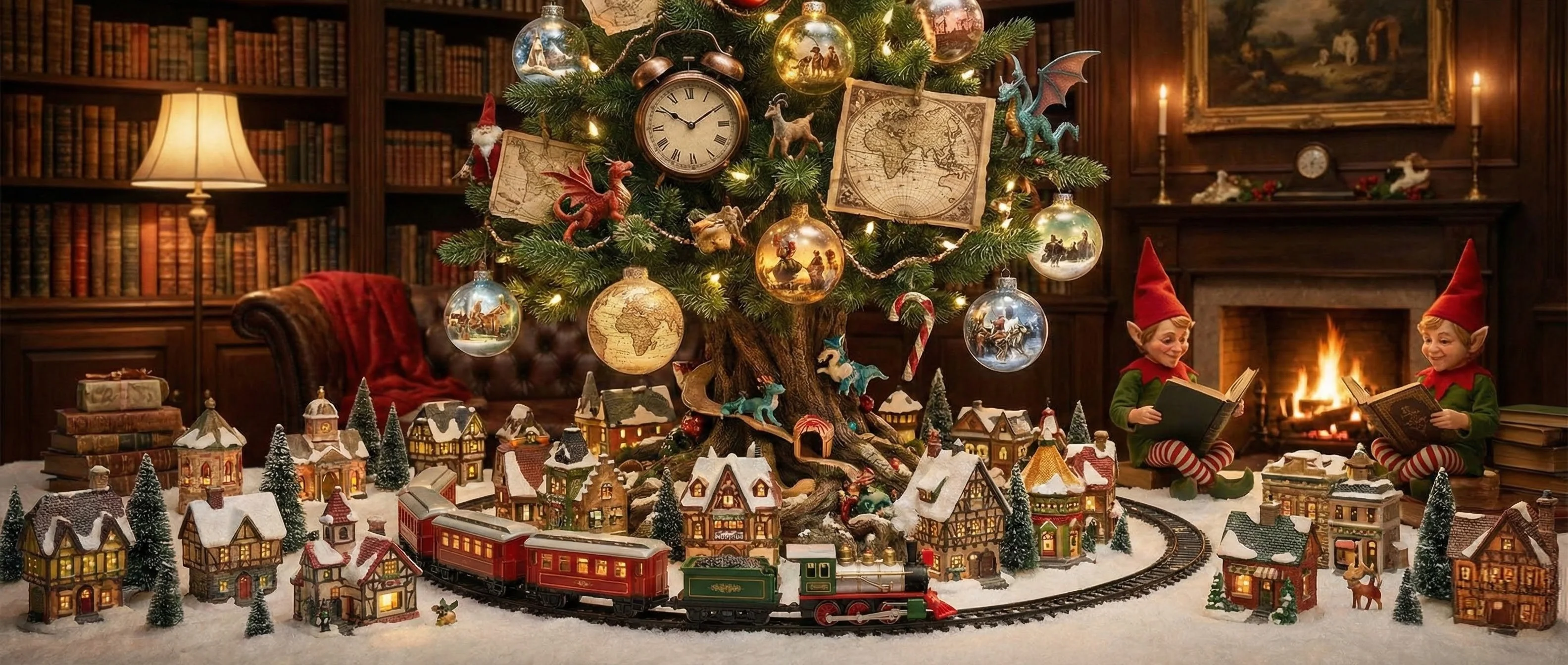
The Christmas Tree

Long before Christianity, various cultures saw evergreen trees (pines, firs) as symbols of life and hope in the face of harsh winters.
-
The Egyptians: They adorned their homes with green palms in honor of the god Ra during the solstice.
-
The Romans: They decorated their temples with laurel branches during the Saturnalia festivals.
-
The Celts and Vikings: In Northern Europe, these plants were believed to protect against evil spirits and symbolized the return of the sun (the Yule festival).
-
Origin of the Christianized tree: According to the legend of Saint Boniface (born Winfrid) in the 8th century, the “Christianized” origin of the tree occurred in Germany. The British missionary found a group of people worshipping a sacred oak dedicated to the god Odin. To stop the rite, he felled the oak and, in its place, pointed to a small fir tree. He called it the “tree of the Christ Child” and explained that its triangular shape represented the Holy Trinity.
-
During the Middle Ages, it was called “The Tree of Paradise”: In the 15th century, theatrical performances of biblical passages became popular. On December 24, the day of Adam and Eve was celebrated, and a tree laden with apples (the tree of the knowledge of good and evil) was placed on stage. Over time, people began to put these “paradise trees” in their homes, eventually replacing the apples with red spheres.
-
The modern version that has reached us today:
-
Germany (16th Century): Considered the cradle of the modern tree.
-
Protestants (especially Martin Luther) popularized the idea of placing candles on it to simulate the starlight over Bethlehem.
-
United Kingdom (1841): The tree became a global phenomenon thanks to Queen Victoria. Her husband, Prince Albert (of German origin), installed a tree at Windsor Castle. When an illustration of the royal family beside the tree was published, the custom became a worldwide trend.
-
Spain: Princess Sofia Troubetzkoy, the illegitimate daughter of Tsar Nicholas I of Russia, introduced the custom. After being widowed by the Duke of Morny (Napoleon III’s half-brother), she married the Spanish aristocrat José Osorio Silva, Duke of Sesto. Sofia missed the traditions of her childhood in Russia and those she had enjoyed in the French and English courts. Thus, for Christmas in 1870, she decided to install the first Christmas tree in the now-vanished Alcañices Palace on Alcalá Street. The Spanish nobility was quick to imitate the custom.
-
Symbolism of the tree ornaments:
- The spheres: Represent the ancient apples of paradise.
- The lights: Replace the wax candles used in the past.
- The stars: Symbolize the guidance of the Magi toward Bethlehem.
- The keys: Symbolize the opening of new paths.
- Cinnamon: Used to attract luck and prosperity.
- Coins: Attract economic abundance.
- Bells: Represent the joy of the birth of the Christ Child; they are a call to happiness. In Northern Europe, they were used to ward off evil spirits or negative energies.
- Ribbons or Christmas bows: Represent family unity and the bonds that hold us together.
- The candy cane: Its “J” shape originated with a choir master at Cologne Cathedral in the 17th century, who requested the shape to represent a shepherd’s crook, reminding children of the “Good Shepherd.” If you turn the cane upside down, it forms the letter “J” for Jesus.
- Its white color symbolizes purity, and its hardness represents the “Rock of Salvation.”
- The red stripes, added in the early 20th century, symbolize sacrifice and blood.
Gingerbread Man

Most historians attribute the creation of the first gingerbread man to Queen Elizabeth I of England. Her royal baker, dedicated exclusively to making ginger sweets, was ordered to make biscuits in the shape and likeness of her illustrious guests and foreign ambassadors at court dinners. They were decorated with edible clothing and identifying details—essentially, an elegant and edible form of diplomacy.
The explosion of its popularity is due to the story “Hansel and Gretel.” In 1875, the famous children’s story of the Gingerbread Man who comes to life and escapes the oven was published in the United States, crying: “Run, run as fast as you can! You can’t catch me, I’m the Gingerbread Man!” This story solidified the character as an icon of popular culture.
The small hole at the top of many gingerbread men is full of symbolism:
In the past, in many Northern and Central European homes, gingerbread cookies weren’t just made for eating, but functioned as:
- Edible ornaments for the tree.
- A substitute for jewelry: Families who couldn’t afford glass or metal ornaments used the colorful and fragrant cookies to decorate their pines.
- The aroma: When hung near candles (when real candles were used), the heat from the tree would cause the ginger and cinnamon to release a delicious scent throughout the house, acting as a natural air freshener.
- The final reward: The hole allowed a ribbon or string to pass through. Tradition dictated that children could “harvest” and eat the ornaments as the Christmas days passed.
Mischievous Elf (The Elf on the Shelf)
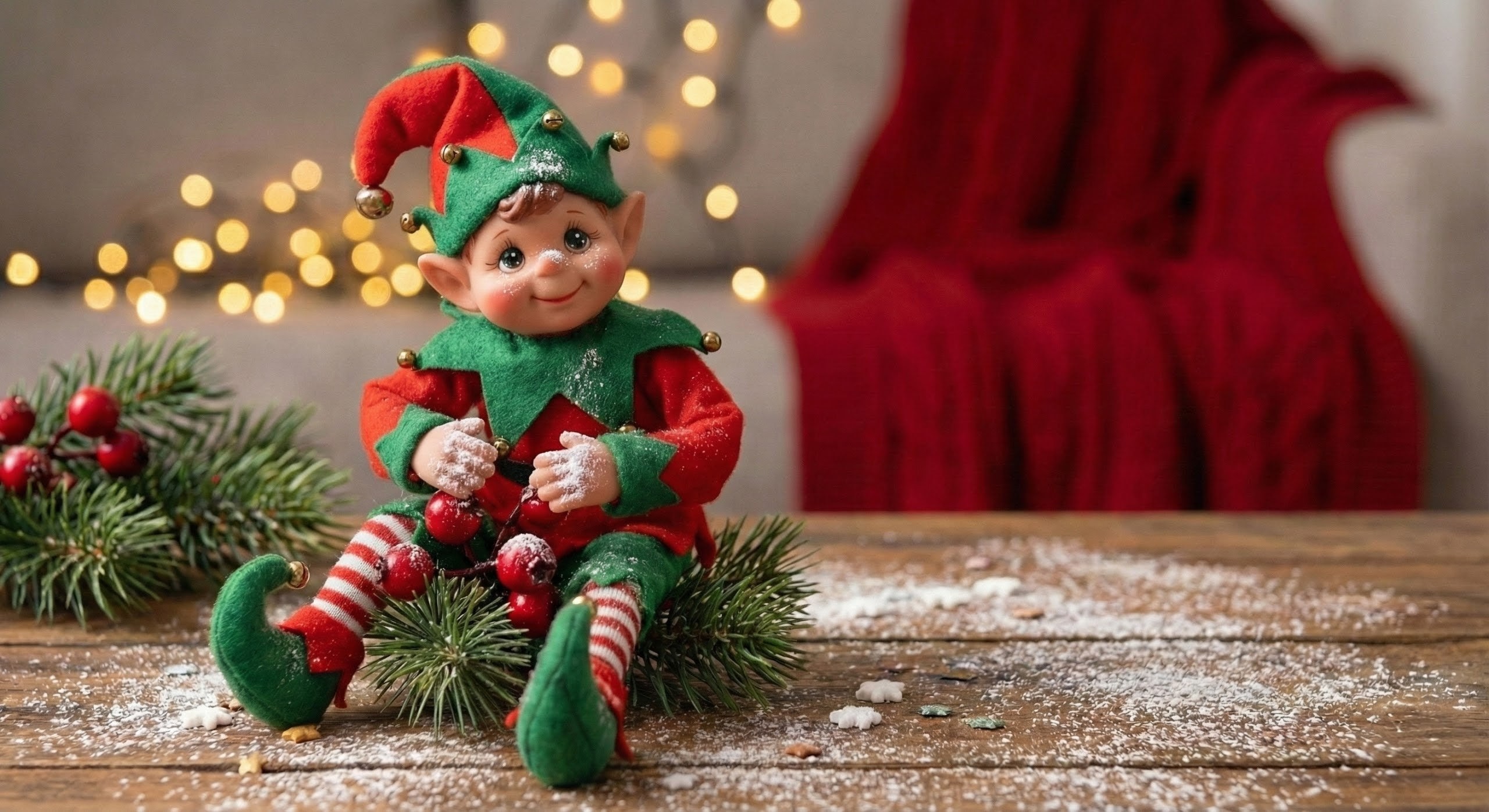
This is one of the most recent Christmas traditions, being barely 20 years old.
It originated in 2005 in the United States, stemming from a children’s book written by Carol Aebersold and her daughter Chanda Bell. They had a family custom dating back to the 1970s where a small toy elf would watch over children to tell Santa Claus who was behaving well. Originally, the elf only hid. However, with the rise of social media, parents began to get more creative, evolving the concept into the “Mischievous Elf.”