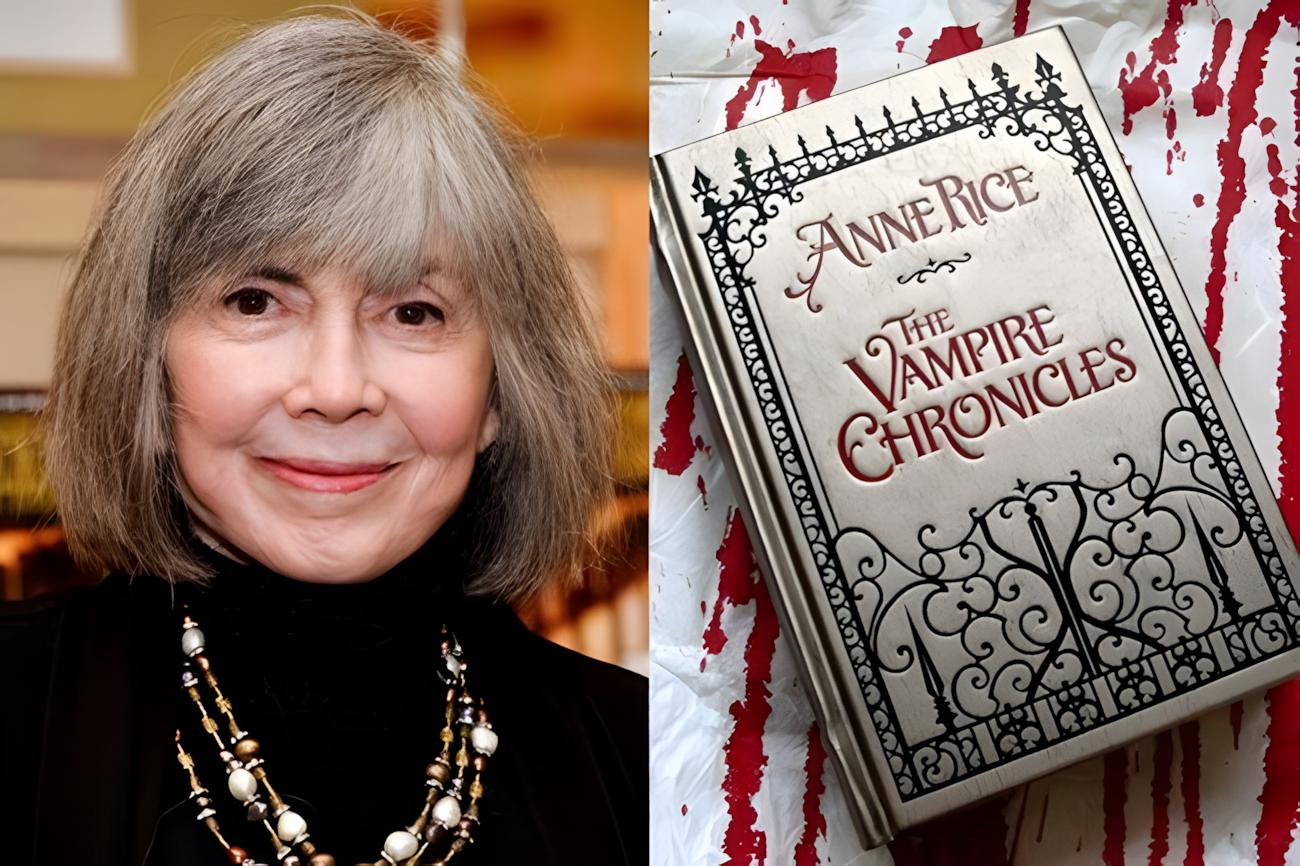
«You have a story inside you, waiting to be told»
Anne Rice did not just write about vampires; she created a cosmogony. Born as Howard Allen O’Brien in 1941 in New Orleans—the city that would become the heartbeat of her work—Rice defied conventions from childhood by adopting the name “Anne.” Her life was a tapestry of faith, tragic loss, and an incessant search for the sublime through the macabre.
The Birth of a Myth: From Tragedy to Immortality
Rice’s literary career was not born of ambition, but of grief. In 1972, the loss of her five-year-old daughter, Michele, to leukemia fractured her reality. From those ashes emerged Interview with the Vampire (1976).
In this work, Rice broke with the archetype of the vampire as a soulless predator inherited from Dracula. Through Louis de Pointe du Lac, she introduced the existentialist vampire: a being who suffers, who questions the morality of his nature, and who desperately seeks meaning in eternity. The figure of the child vampire, Claudia, was her personal catharsis—a way to keep her daughter alive in fiction, trapped in a body that would never age.
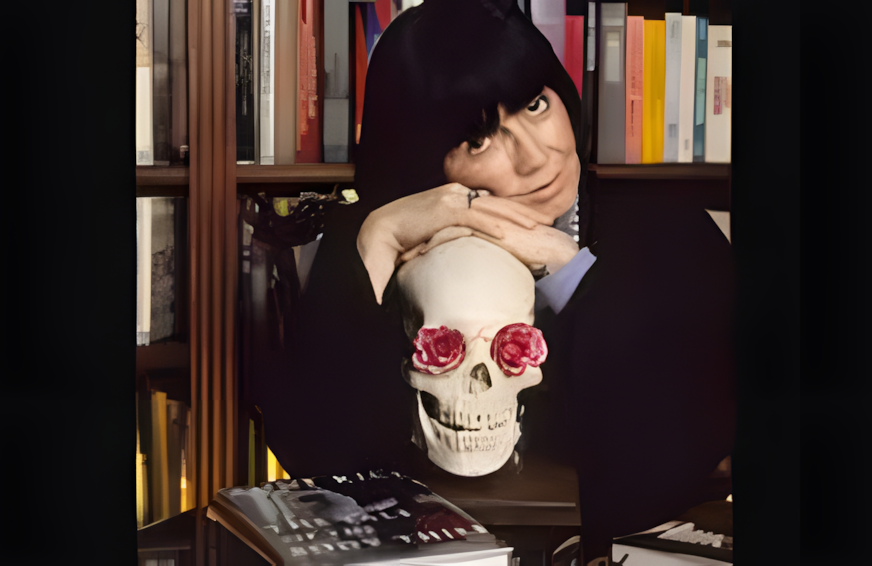
The Vampire Chronicles: The Ascension of Lestat
Although Louis began the journey, it was Lestat the Vampire (1985) who consolidated her fame. Lestat, the “Brat Prince,” personifies vitality, ego, and charisma. Through the Vampire Chronicles, Rice explored themes of homoeroticism, religion, and the loneliness of the immortal, turning her characters into icons of pop culture and precursors to the entire contemporary Gothic genre.
The saga expanded with fundamental titles such as The Queen of the Damned and The Tale of the Body Thief, blending ancient mythology with a vibrant modernity.
Beyond the Fangs: Witches and Pseudonyms
Rice was a prolific author who refused to be pigeonholed. Under the pseudonyms Anne Rampling and A.N. Roquelaure, she explored erotic literature with the Sleeping Beauty Quartet, where she gave free rein to a boundless imagination in decadent locales and Baroque palaces.
Her other great saga, The Mayfair Witches (beginning with The Witching Hour in 1990), returned to her New Orleans roots to narrate a story of lineage, feminine power, and ancestral horrors, which many consider her most dense and ambitious work.
The Cinematic Legacy
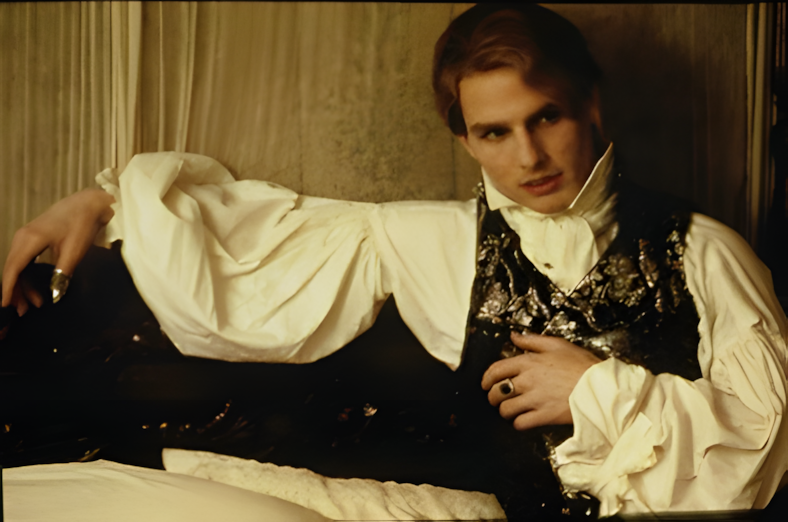
The impact of her work reached its zenith with Neil Jordan’s 1994 adaptation. Although Rice initially opposed the casting of Tom Cruise as Lestat, she ended up publicly retracting her statement after seeing his masterful performance. The film, which also starred Brad Pitt, Antonio Banderas, and a very young Kirsten Dunst, became an instant classic.
Production Trivia:
- A Tragic Casting: The role of Daniel Molloy (the journalist) was intended for River Phoenix, who passed away weeks before filming. Christian Slater took the role and donated his entire salary to the charities Phoenix supported.
- Realistic Atmosphere: The protagonists’ mansion was filmed at Oak Alley Plantation (Louisiana), a location famous for its alleged paranormal phenomena.
- Claudia’s Innocence: Kirsten Dunst, at just 11 years old, gave her first on-screen kiss to Brad Pitt—an experience she would years later recall as “weird” given the age difference and the pressure of the role.
Total Faith and Critical Renunciation
Anne Rice’s relationship with faith was always turbulent. After a fervent return to Catholicism in the 2000s (which inspired her series on Christ the Lord), the author announced in 2010 her definitive break with the Christian institution. Her reason was clear and brave: she could not belong to an organization hostile toward LGBT rights, especially with her own son, author Christopher Rice, being a member of the community.
«In the name of Christ, I refuse to be anti-gay… In the name of Christ, I quit Christianity.»
Anne Rice passed away on December 11, 2021 at the age of 80, leaving behind an immense void but a bibliography that will continue to fuel the nightmares and dreams of readers for generations.
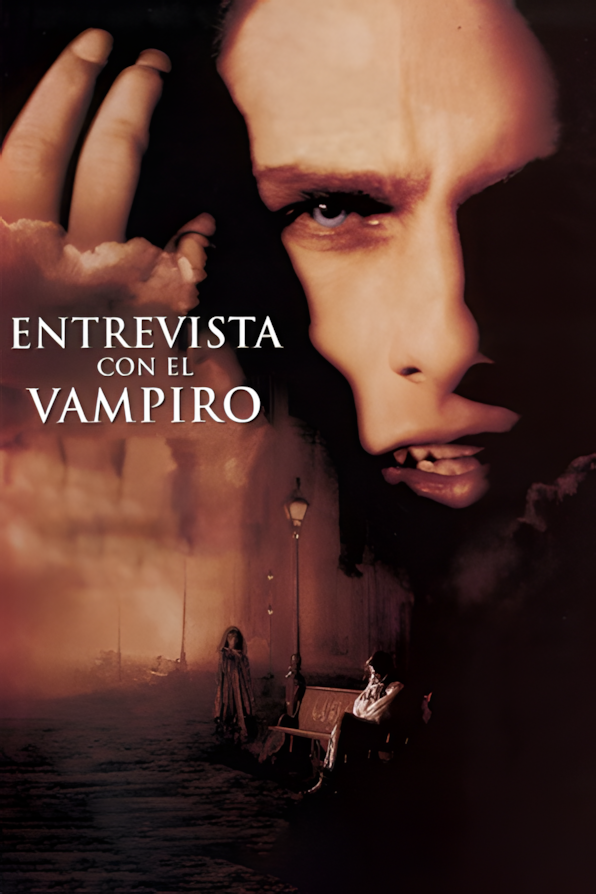
Selected Bibliography
The Vampire Chronicles
- Interview with the Vampire (1976)
- The Vampire Lestat (1985)
- The Queen of the Damned (1988)
- The Tale of the Body Thief (1992)
- Memnoch the Devil (1995)
- The Vampire Armand (1998)
- Merrick (2000)
- Blood and Gold (2001)
- Blackwood Farm (2002)
- Blood Canticle (2003)
- Prince Lestat (2014)
- Prince Lestat and the Realms of Atlantis (2016)
- Blood Communion (2018)
The Mayfair Witches
- The Witching Hour (1990)
- Lasher (1993)
- Taltos (1994)
Other Sagas and Key Works
- The Sleeping Beauty Quartet (as A.N. Roquelaure)
- The Mummy, or Ramses the Damned (1989)
- The Wolf Gift (2012)
- Angel Time (2009)